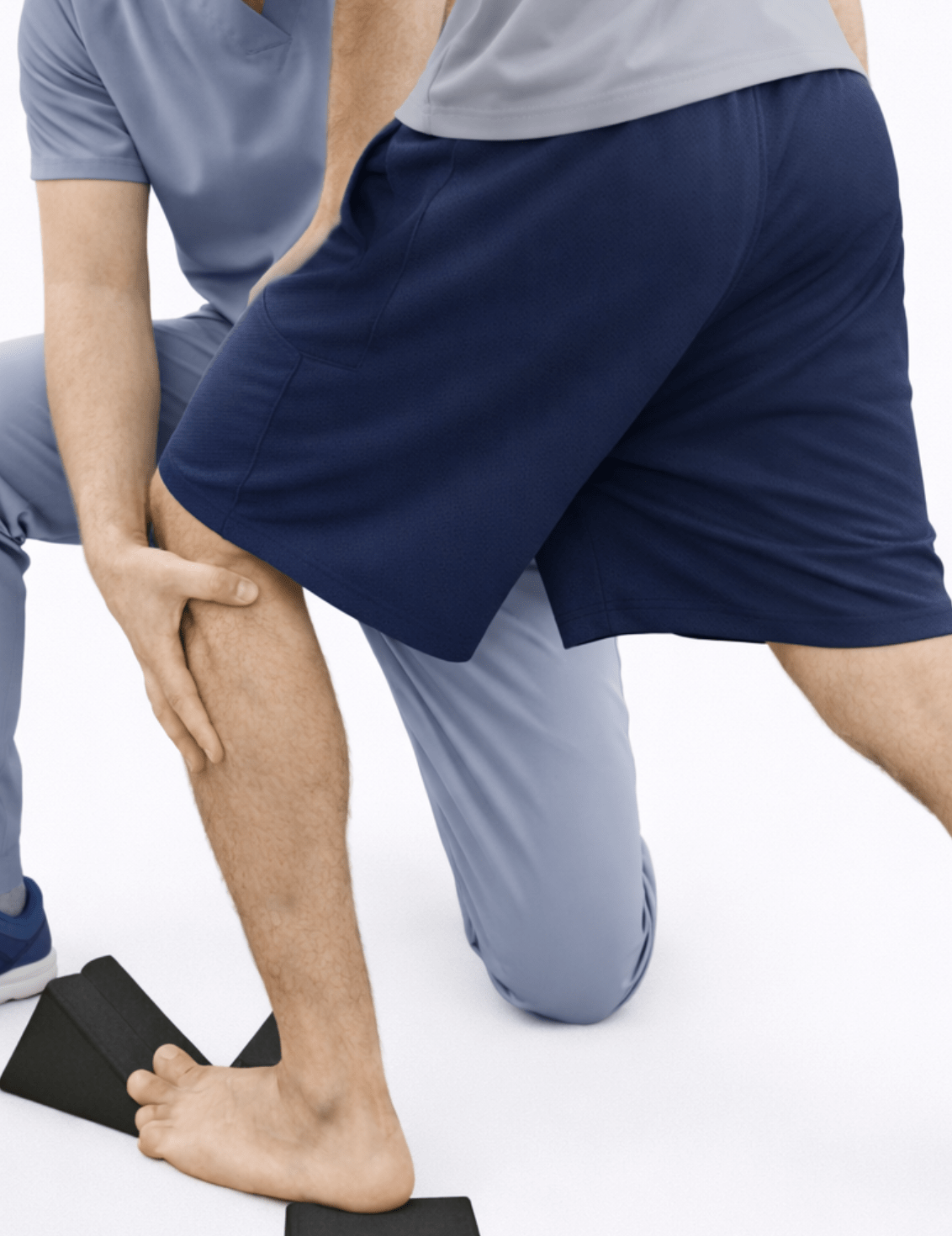
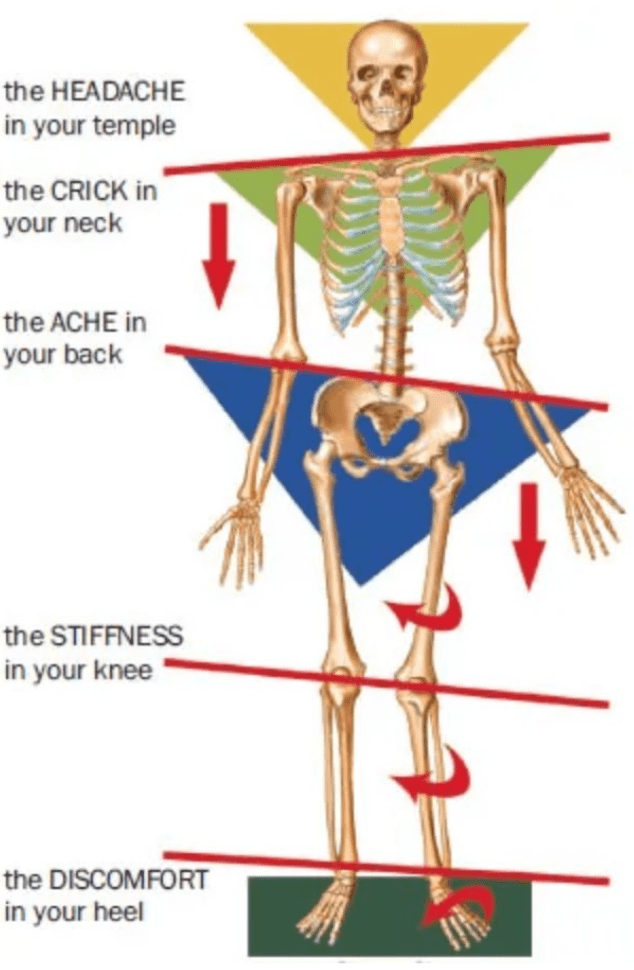
Anatomy in Motion (AiM) is a movement methodology created by Gary Ward, based on his detailed mapping of how every bone and joint in the human body moves through the walking (gait) cycle. By understanding where your body deviates from this natural blueprint, the assessment can identify movement restrictions or compensations that may be relevant to symptoms and function.
AiM doesn’t chase symptoms. Instead, it looks at the whole body as a connected system and restores the movement options your body has lost—giving you back the freedom to move without pain or compensation.
THE MECHANISM
How AiM Works
AiM is built on one foundational principle: every joint in your body has a specific job at every phase of walking. When a joint can’t do its job, the body compensates—and those compensations stack up over time into pain and dysfunction.
Flow Motion Model™ Assessment
Using the Flow Motion Model—a complete map of human movement—your provider assesses where joints are stuck and what movement they’re missing. This often reveals connections that explain why, for example, a foot issue is causing your hip pain.
Targeted Movement Restoration
Through specific, guided movements, we reintroduce the motions your body has lost access to. These aren’t exercises in the traditional sense—they’re precisely designed movements that give your joints back the range they need.
Whole-Body Integration
As missing movements are restored, compensations unwind naturally. Pain decreases not because we treated the painful area directly, but because we gave the body back its ability to distribute force properly across all joints.
WHO IT HELPS
Who Benefits from AiM?
AiM is particularly effective for people who:
Have persistent pain that hasn’t responded to other treatments
Experience pain in one area caused by dysfunction in another
Deal with foot, ankle, knee, or hip issues tied to gait problems
Want to optimize athletic performance and movement efficiency
Have postural imbalances or chronic compensatory patterns
Are recovering from surgery and need to restore natural movement
WHY US
Why AiM at City Integrative Rehab?
AiM requires specialized training and a deep understanding of whole-body biomechanics. Our providers in Midtown Manhattan have studied directly with Gary Ward and the AiM team, and integrate this methodology into our broader rehabilitation approach.
At CityIR, AiM works alongside Sports Chiropractic, DNS, and sport rehabilitation—giving us a complete toolkit to address your movement from every angle. When your joints move properly through gait, everything else we do works better.
Joint-by-Joint
We map how every joint should move
Find the Limiter
The restriction nobody else caught
Beyond the Standard
A different way to assess pain
Manhattan
Advanced-trained providers
THE PROCESS
What to Expect
01
Assessment
Your provider will observe your standing posture and walking pattern, then use the Flow Motion Model to map which joints are restricted and what movements are missing.
02
Treatment
You’ll be guided through specific movements designed to unlock the restrictions found during assessment. Many patients feel a noticeable shift in their body after the very first session.
03
Progression
As your body regains access to lost movements, your provider will layer in more complex patterns and integrate AiM with your broader rehabilitation plan. The goal is lasting change—not temporary relief.
AiM is a whole-body movement methodology created by Gary Ward, based on a detailed map of how every bone and joint moves through the walking (gait) cycle. By finding where your body deviates from that blueprint, the assessment can identify movement findings that may be relevant even when they are not located at the painful area.
How is AiM different from regular exercises?
AiM doesn’t chase symptoms. The guided movements aren’t exercises in the traditional sense—they’re precisely designed motions that give your joints back the range they’ve lost, so compensations unwind and your body distributes force properly again.
What happens during an AiM session?
Your provider observes your standing posture and walking pattern, uses the Flow Motion Model to map which joints are restricted, then guides you through specific movements to unlock them. Many patients feel a noticeable shift in their body after the very first session.
Can AiM explain pain that doesn’t seem connected to its source?
Yes—that’s one of its strengths. Because every joint has a job at each phase of walking, a restriction in one area often drives pain elsewhere. The assessment frequently reveals connections like a foot issue contributing to hip pain.
Who provides AiM, and where?
Our providers in Midtown Manhattan have studied directly with Gary Ward and the AiM team, and integrate the method with Sports Chiropractic, DNS, and sport rehabilitation. AiM is currently available through CityIR Manhattan.
Coverage
Insurance & Payment
Insurance participation and benefits vary by plan, provider, and service. Contact CityIR so the Manhattan office can verify current benefits and any referral, deductible, copay, or authorization requirements before scheduling.
LOCATION
Anatomy in Motion at CityIR Manhattan.
AiM assessment and movement-based care are currently offered through the Midtown Manhattan office. Availability is confirmed when your appointment is scheduled.
MANHATTAN City Integrative Rehabilitation (646) 256-9513
Get Started
Your Recovery Starts Here
If you’ve been stuck in a cycle of pain and compensation, AiM offers a different path. Schedule an initial evaluation at CityIR Manhattan and take the first step toward improving the movement options relevant to your goals.
At CityIR, assessment and care are built around movement, function, and your goals.