Plantar fasciopathy
Persistent plantar-fascia and heel symptoms evaluated in the context of loading and gait.
 Book an appointment
 Focused ESWT + Progressive Rehabilitation
Persistent tendon pain rarely improves through technology alone. CityIR combines diagnosis, targeted focused ESWT when appropriate, progressive loading, and measurable functional goals to help patients build capacity rather than simply chase temporary symptom relief.
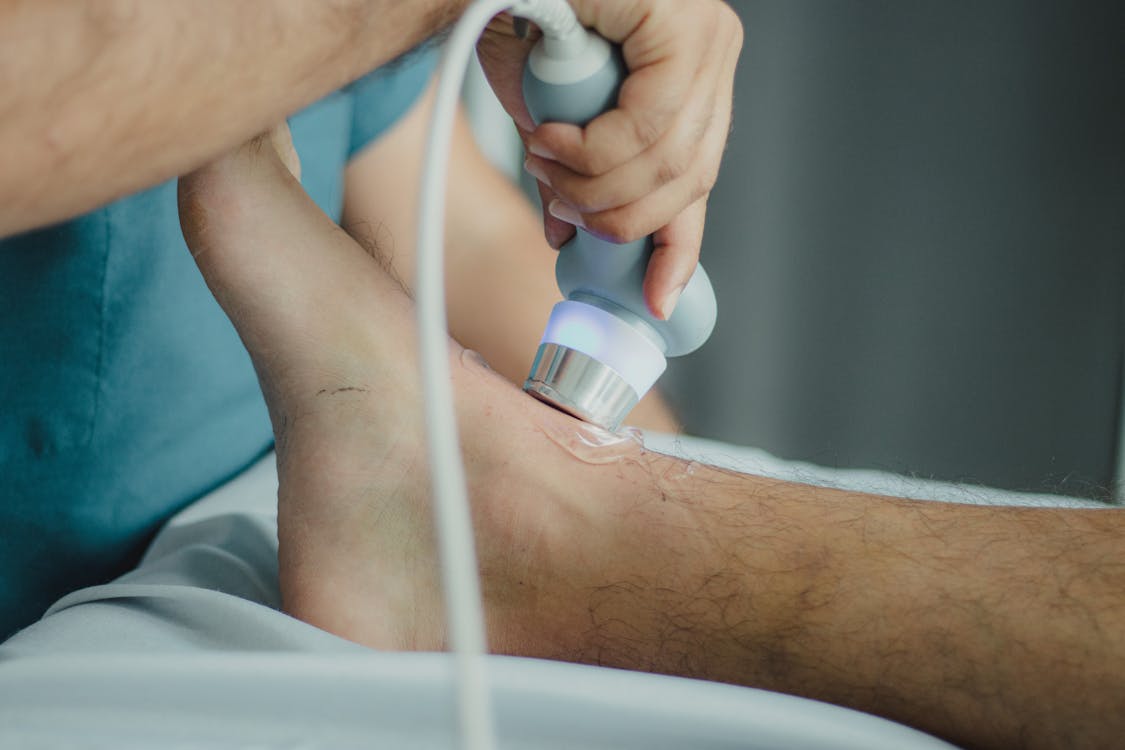
The CityIR Difference
Focused ESWT is offered through CityIR’s Manhattan office when clinically appropriate.
Focused ESWT is selected only when the examination identifies a suitable, depth-specific tendon target—and it is integrated with a progressive rehabilitation plan.
Why Symptoms Persist
Persistent symptoms can reflect more than one factor. The examination helps determine what is relevant for the person in front of us.
Evaluation Before Treatment
Before selecting a treatment, CityIR evaluates the exact pain location and suspected tissue, tendon subtype and anatomical target, response to loading, strength and movement capacity, work and sport requirements, previous treatment, and the function the patient needs to regain.
No device can replace that clinical decision. If the presentation does not fit a tendon problem—or if another specialty is more appropriate—the plan should change.
Where Focused ESWT May Fit
Focused ESWT concentrates mechanical energy within a defined focal treatment zone at a selected depth. CityIR generally favors focused ESWT when an examination identifies an appropriate localized, depth-specific tendon target.
This does not mean focused treatment is universally superior. The diagnosis, anatomy, intended treatment field, device, and rehabilitation plan determine the appropriate choice.
Treatment + Rehabilitation
Shockwave may support a plan, but recovery still depends on how the tendon responds to meaningful activity over time.
Measuring Progress
Useful measures depend on the tendon and the patient’s goals. We may monitor walking or standing tolerance, first-step heel pain, grip and lifting tolerance, stair or squat tolerance, running and jumping capacity, and participation at work or in sport.
Improvement is not assumed. The plan is reassessed against the activities that matter.
Tendon Presentations
Persistent plantar-fascia and heel symptoms evaluated in the context of loading and gait.
Insertional and midportion presentations considered alongside calf capacity and activity demands.
Grip, lifting, work, and sport demands help define the target and outcome.
Knee-extensor loading, jumping, running, and squat tolerance guide progression.
Selected rotator-cuff presentations require examination of tissue, movement, and loading tolerance.
Focused vs. Radial
Focused ESWT creates a defined focal treatment zone and supports depth-specific treatment intent. Radial pressure-wave treatment distributes energy more broadly near the applicator. The appropriate choice depends on the diagnosis, target, anatomy, device, and treatment plan.
A Responsive Plan
Questions Worth Asking
Evidence Reviewed
This guide was informed by diagnosis-specific clinical trials and systematic reviews, including research on Achilles tendinopathy, plantar fasciopathy, lateral elbow tendinopathy, and a focused-versus-radial patellar-tendinopathy trial. Evidence varies by diagnosis, protocol, and outcome; it does not support a universal superiority claim.
Start With the Target
A clinical evaluation can determine whether focused ESWT, radial pressure-wave treatment, progressive rehabilitation, another approach, or referral is the appropriate next step.
Request a Tendon Evaluation