Sport Rehabilitation

The Sports Rehab Clinic for People Who’ve Been Told to Live With It.

When local treatment hasn’t worked, the problem usually isn’t where the pain is. We examine the entire kinetic chain — because the right shoulder and the left hip are connected, and chronic pain rarely starts where it’s felt. Available at our Manhattan, Great Neck, West Hills, and Nesconset clinics.

Book an Appointment

Trained Worldwide
European-based assessment methods our team studied at the source — not the standard US clinic playbook.

A Decade+ of Complex Cases
Treating chronic sports injuries other clinicians have given up on — across every joint and movement system.

The Drivers Most Clinicians Miss
We find the upstream cause of pain — the part of the chain other providers don’t examine.

Why It Hasn’t Worked Yet

Why You’re Still in Pain After Three Other Providers.

Most clinics treat pain where it lives. The shoulder gets manual therapy. The knee gets ice and stim. The lower back gets a stretching protocol. For acute, simple injuries, that approach often works — the tissue heals, the pain resolves, and the patient moves on.

Chronic cases are different. When pain doesn’t respond to local treatment, it’s almost never because the local treatment was wrong. It’s because the local treatment was incomplete. The body works as a chain: the right shoulder and the left hip are linked through the spine, the foot informs the knee, and an old ankle sprain you forgot about can quietly load your hip wrong for a decade. When the source of the problem is upstream of the symptom, treating the symptom in isolation is the definition of a treatment plan that won’t hold.

This is why patients with chronic pain so often go through three, four, or five providers before they find someone who can help. It’s not that the previous providers were unskilled. It’s that they were treating the part of the chain that hurt — not the part of the chain that was driving the pain. We do the opposite. Every patient gets a full-system assessment. We find the driver. Then we treat both the source and the symptom.

The Body as a System

Pain Travels. The Source Doesn’t Always Hurt.

A patient comes in with right hip pain. The right hip has been treated by every provider before us. We assess the entire body and find a left ankle sprain from childhood that never properly healed — a small loss of function on the left side that, over years of tennis, forced the right hip to absorb load it wasn’t built for. The hip became the joint paying the price. The ankle was the source.

This is what “kinetic chain” actually means in clinical practice. Force travels through the body in patterns. When one link in the chain doesn’t do its job — because of an old injury, a movement compensation, a weakness, or a restriction — another link compensates. That compensation is invisible until it isn’t. By the time pain shows up, the source of the problem is often years and several joints away.

Most evaluations don’t look for this.
Ours starts there.

Our Approach

How We Treat Chronic Sports Injuries Differently.

Full-Body Assessment

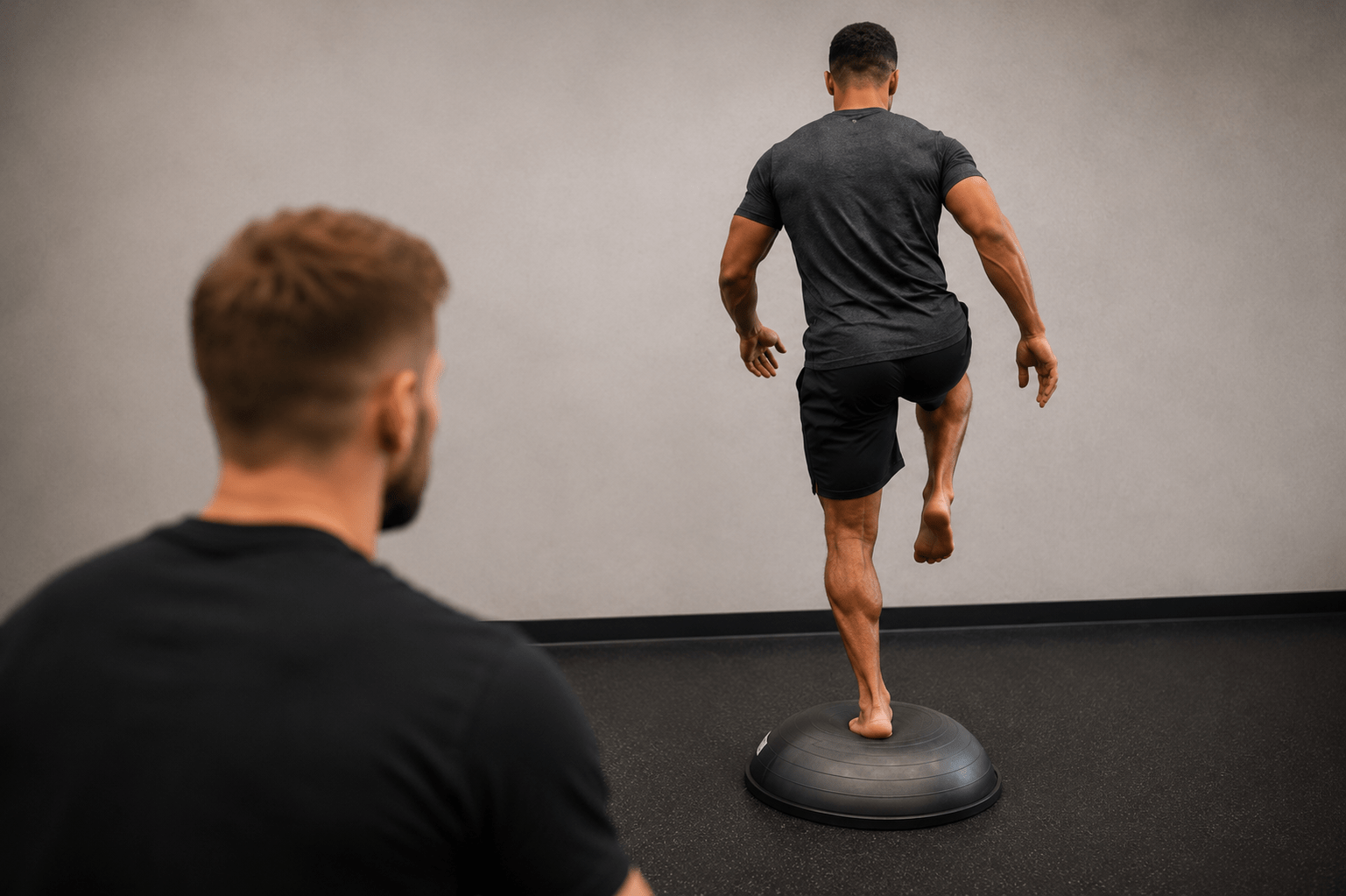
Every patient gets a movement screen across the entire kinetic chain — not just the joint that hurts. Hips, ankles, thoracic spine, single-leg control, gait, and the painful area. The exam is the difference.

Diagnosis Upstream of Symptoms

We identify the driver of your pain, which is rarely the loudest joint. Once we find what’s actually causing the breakdown, the treatment plan writes itself — and it usually looks different from anything you’ve been through before.

Hands-On, System-Level Correction

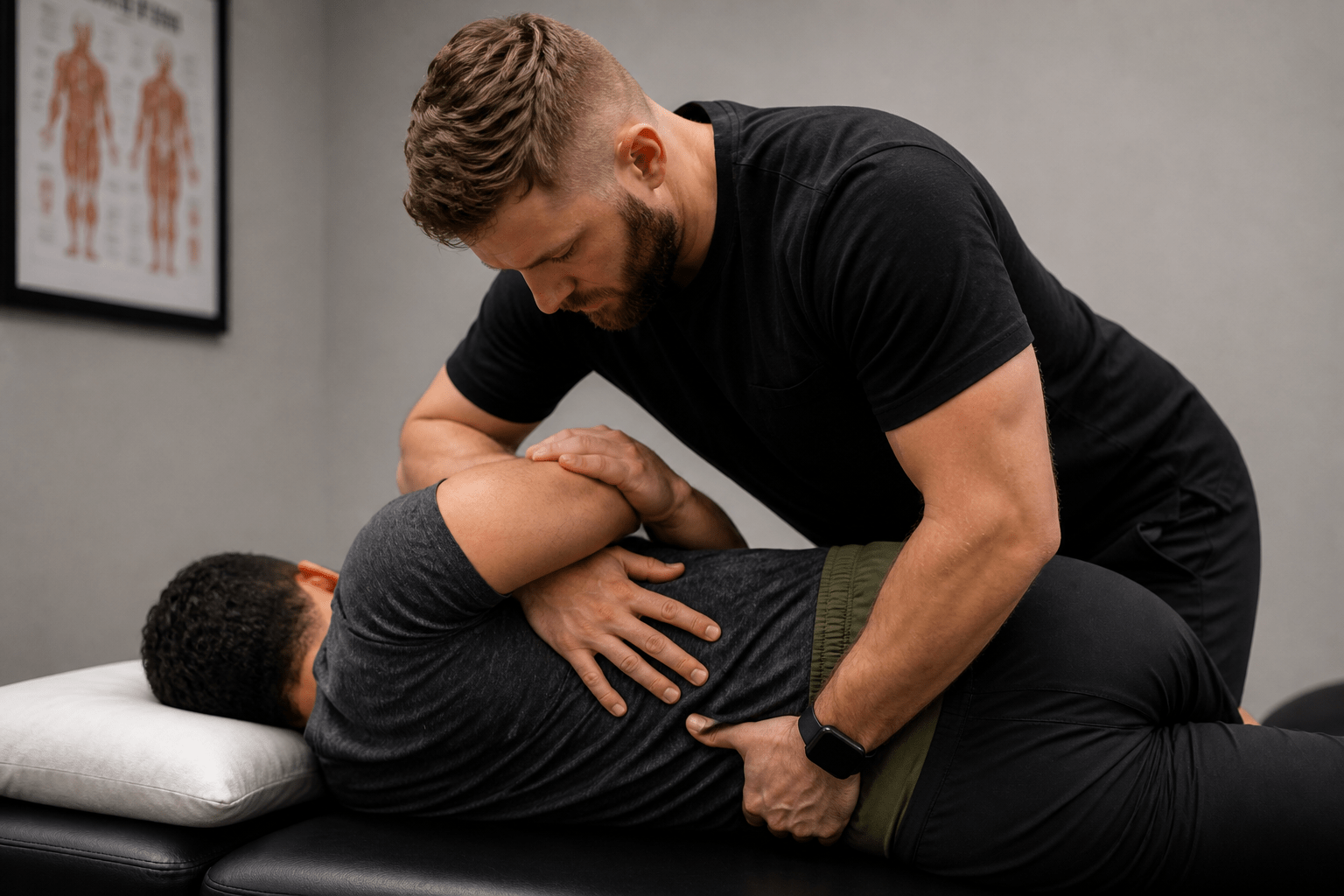
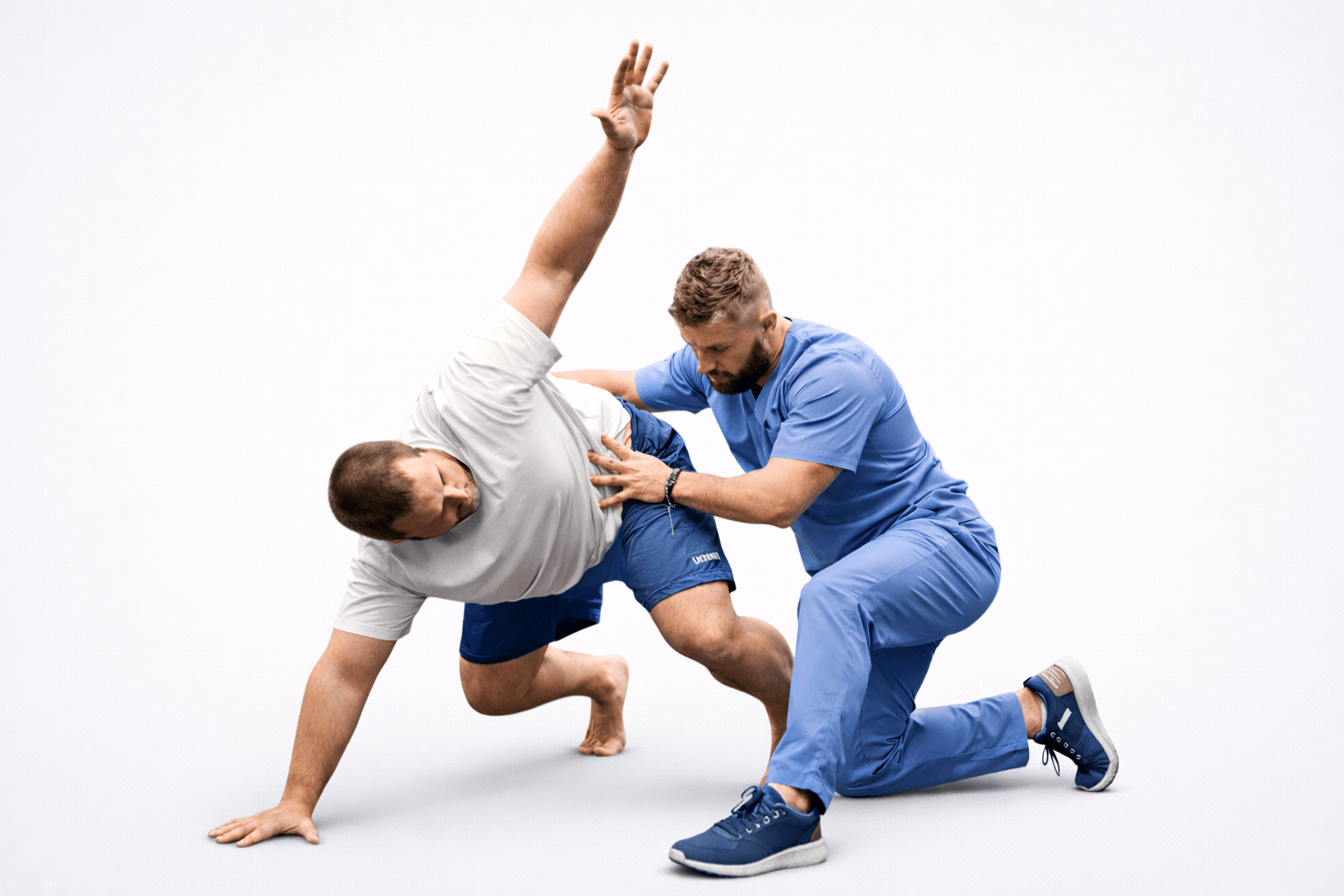
Chiropractic, manual therapy, DNS, Anatomy in Motion, and targeted soft tissue work — applied to the system, not just the spot. The right tools for the actual problem, not a generic protocol.

Active Rebuilding

Corrective exercise that re-trains the entire chain so the original problem doesn’t come back. Most chronic injuries return because the underlying movement pattern was never fixed. We fix the pattern.

Methods That Work Together

Three Disciplines. One Coordinated Plan.

No single technique fixes a complex chronic case. We integrate three core disciplines into every treatment plan and select what each patient actually needs.

Chiropractic Care

Joint mobilization and adjustment to restore proper motion through the spine and extremities — a foundation for everything else we do.

Learn more

Dynamic Neuromuscular Stabilization (DNS)

A Prague-developed system for restoring core function and reactivating the deep stabilizing muscles the body uses to control movement. Critical for chronic pain that hasn’t responded to traditional rehab.

Learn more

Anatomy in Motion (AiM)

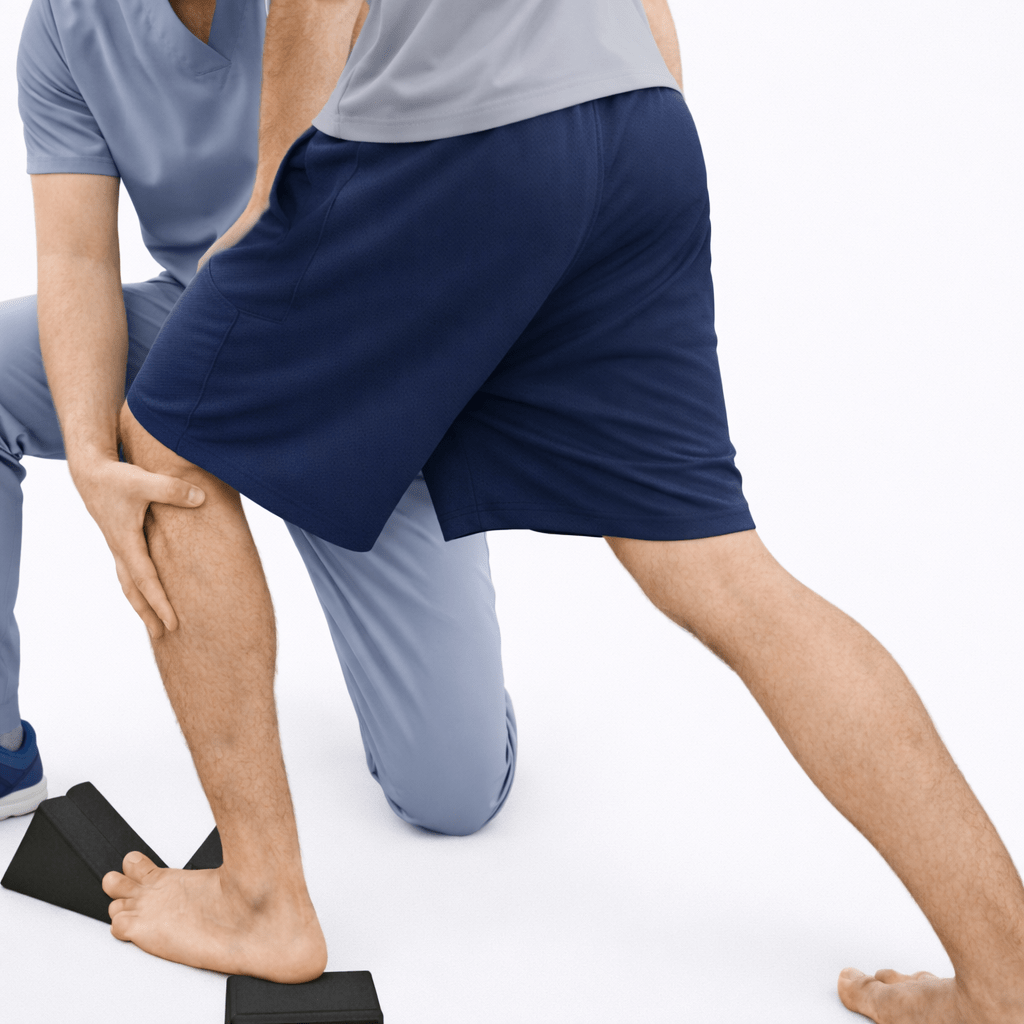
A movement-based assessment and correction method that finds where the body has lost the ability to move through its full range — and rebuilds it. Often the missing piece in chronic chain-driven pain.

Learn more

Real Outcomes

Chronic Cases. Real Results.

Representative patient outcomes from our practice. Names and identifying details have been changed for privacy.

Chronic Hip Pain / Right Hip Tendinopathy

Five years of hip pain. The answer was in her left ankle.

Patient: “Sophie,” 24, tennis player

The problem: Right hip pain that had been with her on and off for five years, and severe for the past twelve months. She’d been through sports medicine consultations, four physical therapy clinics, and two chiropractic offices. Each one treated the hip. None of it stuck. By the time she came to us, she was defeated — convinced she’d just have to live with it or give up the sport.

The decision: She wanted one more opinion from a clinic that would assess the entire body, not just the joint that hurt — before accepting that chronic was the new normal for a 24-year-old.

What we found: A childhood left ankle sprain — long forgotten, never properly rehabilitated — had quietly changed how she moved for years. The ankle never regained full function, so her body compensated by loading the right side disproportionately. Five years of tennis, thousands of single-leg pivots and stops, and the right hip became the joint that paid the price for an ankle injury everyone had stopped thinking about a decade ago. Six clinicians had treated her hip. None of them had asked about her ankles.

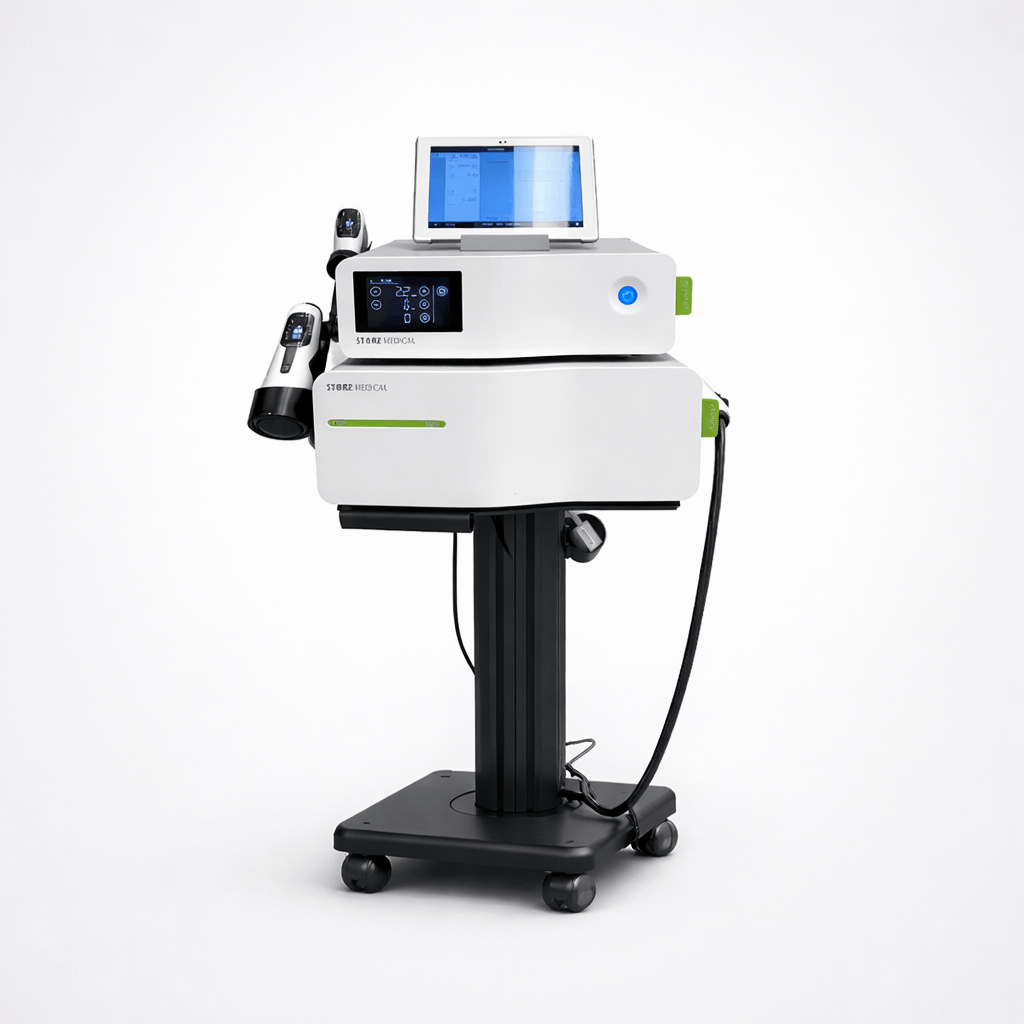
The treatment: Anatomy in Motion and DNS work to rehabilitate the left ankle and restore proper loading through the entire chain, paired with 4 sessions of focused shockwave therapy (fESWT) on the right hip to address the gluteal tendinopathy that had developed from years of compensation.

Outcome: Back to her normal activity within 8 weeks. Five years of chronic hip pain resolved by treating an ankle she didn’t even remember was a problem.


Pain-free after 3 years of orthotics, injections, and “nothing else to try.”

Patient: “Linda,” 56

The problem: Persistent left heel pain for nearly three years. She’d tried everything the standard playbook offers — custom orthotics, multiple cortisone injections, stretching protocols, anti-inflammatories — and nothing produced lasting relief. By the time she came to us, she’d been told there wasn’t much else to do besides live with it or consider surgery.

The decision: She wanted one more opinion before accepting either option, from someone willing to look beyond the foot itself.

What we found: The plantar fascia was inflamed, but it wasn’t the source of the problem. Linda’s gaitl pattern was overloading the foot every step she took — weakness through her hip and core meant her body wasn’t controlling how force traveled down the chain into the heel. Every clinician before us had treated the foot. No one had assessed the system loading it.

The treatment: 5 sessions of focused shockwave therapy (fESWT) to address the local tissue damage and trigger real healing in the fascia, paired with DNS and Anatomy in Motion work to correct the gait pattern and rebuild stability through the chain. Five weeks total.

Outcome: Completely pain-free at discharge. Three years of treatment that didn’t work, resolved in five weeks — because the foot wasn’t the only thing being treated.


Lumbar Disc Herniation / Sciatica

Surgery recommended. Surgery avoided.

Patient: “James,” 34, new father

The problem: L4/L5 disc herniation with severe right-sided radiating pain down the leg and a slight foot drop. He couldn’t sleep through the night. Pain medications helped some, but the fatigue meant he could only take them in the evening — not workable with a young child at home. His primary care doctor referred him to physical therapy. It didn’t help. His neurologist told him the next step was a discectomy.

The decision: Before signing up for spine surgery, he wanted one more attempt at rehab — from a clinic that would actually examine why his disc was failing in the first place.

What we found: The disc was the injury, but the system around it was the problem. James had lost the ability to stabilize his lumbar spine through his core, his deep spinal muscles weren’t engaging, and his hips weren’t moving enough to share load during everyday motion. Every movement he made was being absorbed by a single compromised disc instead of distributed through the chain. Treating the disc alone — what his prior PT had attempted — couldn’t work, because the mechanics that injured the disc were still in place.

The treatment: A combination of chiropractic care, DNS to restore core function and reactivate his deep stabilizers, Anatomy in Motion to free hip mobility, and targeted strengthening of the spinal musculature — all working to take pressure off the disc and rebuild a system that could protect itself.

Outcome: Relief started immediately. Progress continued through six weeks of treatment until discharge. Surgery was no longer indicated. Sleeping through the night, off the medication, back to full function as a father and a person.


Post-Surgical Shoulder Recovery / Torn Labrum

From cleared-for-rehab to playing catch with his son.

Patient: “Daniel,” 38

The problem: Surgical repair of a left torn labrum after a car accident. By the time he was cleared for rehabilitation, his shoulder showed everything you’d expect from post-surgical immobilization — severe muscle atrophy, significantly limited range of motion, surgical scarring, and the deconditioning that comes with weeks of guarding the joint. He wasn’t just rehabbing an injury. He was rebuilding a shoulder that had effectively been switched off.

The decision: Standard post-surgical PT would address the joint locally and progress slowly through a generic protocol. He wanted a recovery plan that treated the shoulder as part of a system — not a checklist of milestones to grind through.

What we found: A shoulder that needed two things at once. The local tissue needed to heal — the surgical scarring and atrophy weren’t going to remodel themselves on stretching alone. And the neuromuscular control of the entire shoulder complex needed to be rebuilt from scratch, because the brain had spent weeks learning to protect the joint instead of use it. Treating one without the other would mean a stiff but pain-free shoulder, or a mobile shoulder that re-injured.

The treatment: 5 weeks of focused Shockwave therapy (fESWT) targeting the surgical site to drive tissue remodeling and break down restrictive scarring, paired with DNS work to reactivate the rotator cuff and scapular stabilizers and restore proper neuromuscular control of the shoulder complex. Light range-of-motion progressions throughout.

Outcome: Nearly full range of motion and visible return of muscle mass by week four. Playing catch with his son to a controlled extent by week eight. Discharged at week twelve, back to full activity — a shoulder that moves, holds, and works the way it did before the accident.


Runner’s Knee / Left Knee Pain

Back to competitive running after 18 months of being told to stop.

Patient: “Mark,” 46, competitive recreational runner

The problem: Persistent left knee pain for over a year and a half. His primary care doctor told him to stop running entirely. He’d done a course of physical therapy that consisted mostly of stim and stretching — temporary relief during sessions, no lasting change. The pain returned every time he tried to ramp his mileage back up. Mark is competitive by nature and “stop running” wasn’t a treatment plan he was willing to accept.

The decision: He wanted to find someone who would actually look at why the knee was hurting — not just treat the spot that hurt — before he gave up the sport.

What we found: Mark couldn’t shift his body weight to the right side. Every step he took loaded the left side disproportionately, and over thousands of running strides per week, that asymmetry compressed the left knee until the tissue couldn’t keep up. The knee wasn’t the problem — it was the joint paying the price for a system that wouldn’t let him stand evenly on two feet. His previous PT had treated the knee. No one had assessed how he was loading.

The treatment: Anatomy in Motion (AiM) work to restore his ability to shift right and load both sides of his body symmetrically, paired with corrective exercise to retrain the pattern under running-specific demands.

Outcome: Back to competitive running within 4–6 weeks. Pain resolved by addressing the loading asymmetry — not the knee itself.


Individual results vary. The case studies above are representative of outcomes we’ve seen in our practice and are not a guarantee of specific results. Treatment plans are customized based on diagnosis, imaging, and individual response to care.

Visible Results

The Difference, Side by Side.

Real patients. Real change. The work shows.

Before and after — postural correction at CityIR
Shoulder symmetry restored.
Before and after — full-body postural alignment at CityIR
Posture rebuilt from the ground up.
Before and after — scapular and spinal alignment at CityIR
Scapular alignment restored.

Is This Right For You

Who We’re Built For.

Sport rehabilitation at CityIR is designed for active people who have been failed by the standard approach — and for active people who want to make sure they don’t end up there.

You’ve been to multiple providers
PT, chiropractor, sports medicine, orthopedist — and the pain keeps coming back.

You’ve been told to “stop”
Stop running, stop lifting, stop the sport — and you’re not willing to accept that as an answer.

You’re recovering from surgery
And you want a recovery plan that rebuilds the whole system, not just the joint.

You’re an athlete recovering from injury
And you want to come back stronger than you were before — not just back to baseline.

A desk job has broken your body
And you want to fix it instead of managing it.

You’re a weekend warrior
Whose recurring pain is starting to define your week.

You’re an active person, period
Runner, lifter, cyclist, parent who plays with their kids — and you want to stay healthy long-term.

You want one-on-one care
Not a high-volume clinic with twenty-minute slots. Every session is one-on-one with your provider.

What We Treat

Conditions We See Every Week.

A representative list of the chronic and acute musculoskeletal conditions we treat through our sport rehab program. Many of our patients arrive with diagnoses that overlap multiple categories.

Lower Back

  • Chronic low back pain
  • Sciatica and radicular leg pain
  • Disc herniation (post-conservative care)
  • SI joint dysfunction
  • Post-surgical back pain
  • Recurring low back episodes

Lower back pain

Knee

  • Runner’s knee (patellofemoral pain)
  • IT band syndrome
  • Patellar tendinopathy (jumper’s knee)
  • Post-meniscectomy / ACL recovery plateau
  • Chronic knee pain not responding to PT

Knee pain treatment

Knee

h4>

  • Rotator cuff pain and tendinopathy
  • Frozen shoulder (adhesive capsulitis)
  • Post-surgical shoulder recovery
  • Shoulder impingement
  • Throwing and overhead-athlete pain

Shoulder pain treatment

Foot & Ankle

  • Plantar fasciitis
  • Achilles tendinopathy
  • Recurring ankle sprains
  • Post-fracture stiffness
  • Chronic foot pain in runners

Ankle & foot pain

Hip

  • Hip impingement (FAI)
  • Gluteal tendinopathy / GTPS
  • Labral tear pain
  • Chronic hip pain in runners and athletes
  • Post-surgical hip recovery
  • Hip flexor strain

All hip conditions

Elbow & Other

  • Tennis elbow (lateral epicondylitis)
  • Golfer’s elbow (medial epicondylitis)
  • Throwing elbow pain
  • Chronic neck pain and tension
  • Sports injuries of all major joints

Sports injuries

And many more. If your condition isn’t listed and you’ve been struggling to find answers, call or book online to find out if our approach is right for you.

View All Conditions We Treat

Not sure if our approach is right for your case?

Call or text any of our offices to talk to our team — no pressure, just answers.

What to Expect

What Your First Visit Actually Looks Like.

The evaluation is what makes the difference. Most chronic patients tell us their previous evaluations took ten minutes and focused entirely on the area that hurt. Ours starts with the whole system.

Step 01

Full History

We go through your injury history, your past treatments, your training and activity demands, and your goals — not just the chief complaint. The story matters because chronic pain almost always has a story.

Step 02

Whole-Body Movement Screen

Range of motion, single-leg control, gait, hip and ankle mechanics, thoracic mobility, core engagement, and the painful area. This is the part of the exam most clinics skip. It’s where we find what they missed.

Step 03

Identifying the Driver

We tell you what we found and what we think is causing the breakdown — in plain language, with the reasoning. If it’s not what you expected, we explain why. You leave the evaluation understanding your own body better than when you walked in.

Step 04

Building the Plan

A personalized plan based on what we found, including which modalities apply (chiropractic, DNS, AiM, Shockwave when indicated, corrective exercise), expected timeline, and what success looks like for your specific case.

How We’re Different

Sport Rehab vs. Standard Care.

A direct comparison of how sport rehabilitation at CityIR compares to the most common alternatives chronic-pain patients have already tried.

Standard PT ClinicLocal-Only ChiropractorCityIR Sport Rehab
Assessment scopeThe painful areaSpine and adjacent regions
Time per sessionOften shared with multiple patients; aide-led exerciseOne-on-one for the adjustment, brief
Treatment focusReduce pain in the affected areaRestore joint motion locally
Methods integratedStim, stretching, exerciseAdjustment, sometimes soft tissue
When pain returnsOften, because the source wasn’t foundSometimes, depending on chain involvement
Best forAcute simple injuriesAcute spine and joint dysfunction

Questions & Answers

Frequently Asked Questions.

Why should I come here if I’ve already tried physical therapy?

Because most physical therapy focuses on the area that hurts. If the source of your pain is somewhere else in the chain — which is the case in most chronic injuries — local treatment can’t fully resolve it. Our evaluation looks at the whole system specifically to find what previous providers may have missed.

My pain is in my knee. Why would you assess my hip or my ankle?

Because the knee is rarely the source of knee pain. It’s almost always the joint paying the price for something happening above or below it — how your hip controls rotation, how your ankle absorbs load, how your foot strikes the ground. If we treat only what hurts, we ignore what caused it. That’s why the same knee pain keeps coming back through three rounds of treatment. We assess the whole chain so we can fix it once.

What if my MRI shows a clear injury — do I still need a full-body assessment?

Yes. The MRI tells you what’s damaged. It doesn’t tell you why. A herniated disc, a partial tendon tear, a labral injury — these are real injuries, but they didn’t happen at random. Something in how your body was loading that tissue made it the weak link. If we treat the injury without addressing the loading pattern that caused it, the same area (or a neighboring one) is at risk of failing again. The MRI tells us where to focus locally. The full-body assessment tells us why it broke down in the first place.

What if my pain isn’t from sports?

That’s fine. We use the term “sport rehabilitation” because the methods we use were developed for high-performance recovery, but they apply to anyone with a body that needs to work — runners, desk workers, parents, post-surgical patients, anyone with chronic pain. The kinetic chain doesn’t care whether the pain came from a marathon or from sitting at a desk for a decade.

Howd you decide if it’s a chain issue or a local issue?

The evaluation. We screen the entire body and watch how it moves. If the painful area is the actual source of the problem, the exam will show it and we treat it directly. If the source is upstream, the exam will reveal that too. Most chronic cases turn out to be chain-driven, but some aren’t, and the only way to know is to look.

What types of injuries do you treat?

A wide range — sprains, strains, tendinopathies, post-surgical recovery, overuse injuries, joint dysfunction, chronic pain, and complex cases that have failed other treatment. If you’re an active person dealing with pain that hasn’t resolved, we can usually help or tell you who can.

How long does a typical session last?

Sessions run approximately 30–45 minutes depending on your treatment plan. Every minute is one-on-one with your provider.

How many sessions will I need?

It varies by case. Most patients see meaningful improvement within 4–8 sessions. Complex chronic cases may take longer. We’ll outline an expected timeline at your first visit and adjust based on how you respond.

Do I need a referral?

No referral is needed for chiropractic care. For some physical rehabilitation services, requirements depend on your insurance — our team will help you navigate this.

Can I continue training while in treatment?

In most cases, yes. We modify training as needed during recovery so you can stay as active as is safely possible. Stopping cold turkey is rarely the right answer.

What about insurance, pricing, and payment?

We offer multiple paths to care — in-network options, out-of-network with reimbursement documentation, no-fault coverage for motor vehicle accidents, and flexible payment plans. Full details are on our booking page, or call any of our locations and our team will walk you through what fits your situation.

Which locations offer sport rehabilitation?

Sport rehabilitation is available at our Manhattan, Great Neck, West Hills, and Nesconset locations.

You’ve already tried treating where it hurts. Let’s find what’s driving it.

Book online or call any of our four offices to schedule a full-system evaluation. Sport rehabilitation is available at our Manhattan, Great Neck, West Hills, and Nesconset locations.

Book an Appointment


();