
Sports rehabilitation · NYC & Long Island
Sports Rehabilitation Built Around How You Move.
One-on-one sports rehabilitation combining hands-on care, movement-based diagnosis, and progressive exercise for athletes and active people.
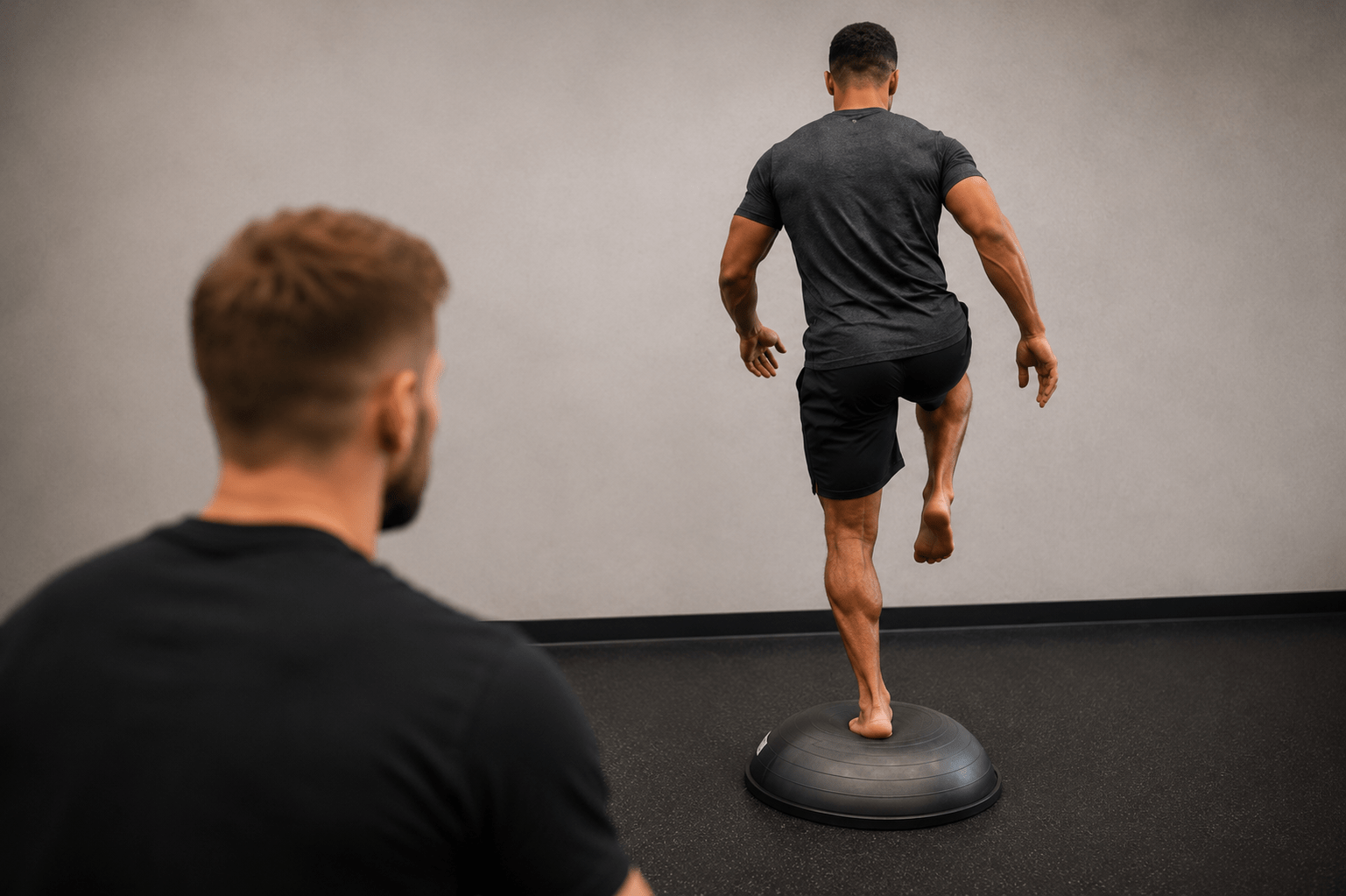
A different standard
Not generic rehab.
Your injury, movement strategy, sport, and goals determine the treatment—not a preset protocol.
CityIR combines Sports Chiropractic, physical rehabilitation, manual therapy, corrective exercise, and advanced technology when it meaningfully supports recovery. We look beyond the pain site to understand why the tissue became overloaded and what must change for the result to last.
The principle
Treat the injury. Rebuild the movement.
Symptom relief matters, but the larger goal is confident return to training, work, and everyday activity.
Our approach
One coordinated recovery plan.
Every component has a reason for being there, and the plan progresses as your capacity changes.
Movement-chain diagnosis
We evaluate the injury, loading pattern, joint mechanics, and compensations that may be keeping it irritated.
Hands-on treatment
Joint mobilization, chiropractic care, and targeted soft-tissue work restore motion and reduce protective restriction.
Active rehabilitation
Guided exercise rebuilds strength, coordination, endurance, and tolerance for the demands of your activity.
Return to performance
Progressive loading and sport-specific preparation help you return with confidence instead of simply testing the injury too soon.
Why CityIR
Technology guided by examination.
Direct clinician care
Your session is not handed off to an aide or divided among several patients.
Multiple disciplines, one plan
Chiropractic, rehabilitation, DNS, AiM, and shockwave can be coordinated when clinically appropriate.
Built for complex cases
We welcome persistent and recurring problems that have plateaued with a one-size-fits-all approach.
Skills that leave with you
You learn how to load, move, and train between visits so progress continues outside the clinic.
Your recovery journey
A clear path back to activity.
Timelines vary by injury, but the clinical sequence stays deliberate.
Evaluation
We assess the injury, relevant movement patterns, training demands, health history, and goals.
Restore
Hands-on treatment and early exercise address mobility, pain sensitivity, and the movement barriers limiting recovery.
Rebuild
Progressive exercise restores strength, control, and tissue tolerance through increasingly demanding tasks.
Return
Activity-specific preparation bridges the gap between feeling better and being ready to perform again.
Who it helps
For people who need their body to keep up.
Suitability depends on the diagnosis and stage of recovery. Your evaluation determines the right starting point.
Acute and overuse injuries
Sprains, strains, tendinopathy, and training-related pain that limits participation.
Post-surgical return
Structured progression from protected healing to strength, confidence, and full activity.
Recurring or chronic pain
Problems that improve temporarily but return when work, exercise, or competition increases.
Performance and prevention
Active people who want better movement options and a more durable physical foundation.
Conditions we treat
Common injuries, evaluated in context.
We assess the injured area in relation to the movement, training load, and physical demands surrounding it.
Spine and upper body
- Neck pain and stiffness
- Shoulder and rotator cuff injuries
- Elbow, wrist, and hand pain
- Lower-back pain
Lower body and sport
- Hip and groin injuries
- Knee pain
- Foot and ankle injuries
- Running and field-sport injuries
Insurance & planning
Clear expectations before care begins.
Coverage and treatment frequency depend on your plan, diagnosis, and location.
Benefits and payment
Our team can verify benefits and explain expected costs before you begin. Self-pay and flexible payment options may be available when a service is not covered.
Important context
Recovery timelines and outcomes vary by injury, health history, participation, and individual response. Your clinician will explain the recommended plan and how progress will be measured.
FAQ
Questions before starting sports rehabilitation.
What types of injuries do you treat?
We treat sprains, strains, tendinopathy, post-surgical recovery, overuse injuries, back and neck pain, and joint dysfunction. Your evaluation determines whether our approach fits your diagnosis and goals.
How long does a typical session last?
Most sessions run approximately 30–45 minutes, depending on the treatment plan and stage of recovery.
How many sessions will I need?
This varies by injury and individual response. During the initial evaluation, your clinician will outline a recommended timeline and the measures used to track progress.
Do I need a referral?
No referral is generally needed for chiropractic care. Requirements for physical rehabilitation services can depend on your insurance plan; our team can help verify them.
Can I continue training while in treatment?
Often, yes. We help modify training load and exercise selection so you can remain as active as is appropriate while the injury recovers.
Which locations offer sports rehabilitation?
Sports rehabilitation is available through CityIR in Manhattan, Huntington, and Nesconset. Providers, equipment, and specific services may vary by location.
Ready to start your recovery?
Book an Appointment Great Neck: (516) 418-3798 Manhattan: (646) 256-9513 Huntington: (631) 659-2980Nesconset: (631) 584-8783Choose the office that fits your routine.
Get one-on-one sports rehabilitation and chiropractic care in Midtown Manhattan or Great Neck. Both offices build treatment around your injury, activity, and return-to-performance goals.
Midtown Manhattan
420 Madison Ave, Suite 803, near Rockefeller Center.
Great Neck
560 Northern Blvd, Suite 106B, serving the North Shore and Nassau County.