Diagnosis first
Disc, joint, nerve, muscular, and other pain patterns do not call for the same plan.
 Book an appointment
 VAX-D SPINAL DECOMPRESSION · HUNTINGTON
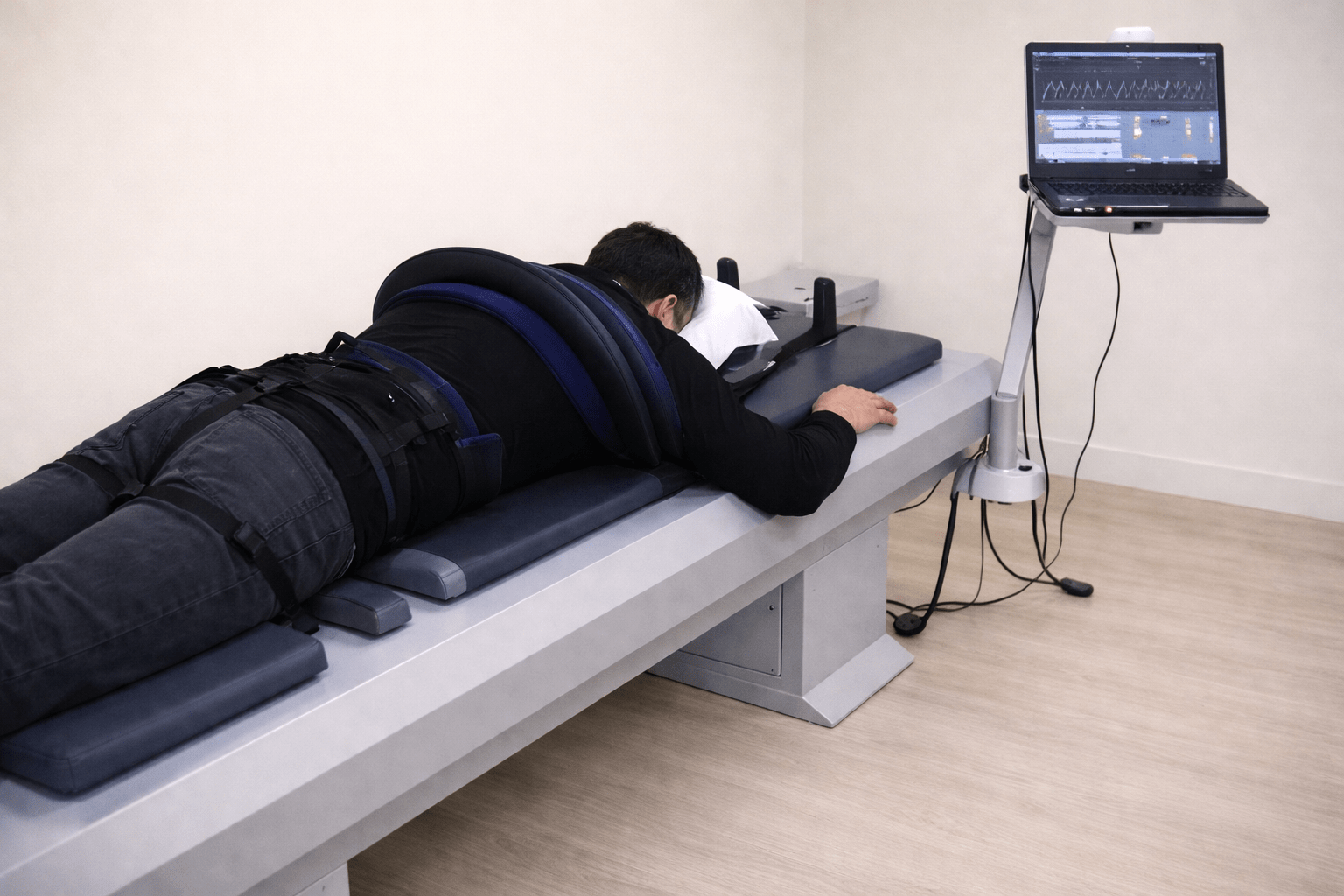
VAX-D is not a generic answer for every painful back. At West Hills, the process begins by deciding whether the symptoms, examination, and imaging when relevant actually support a decompression approach.
THE REAL DIFFERENCE
Patients often arrive after being told that every decompression program is essentially the same. It is not. The meaningful difference is whether the clinician identifies a plausible disc or nerve-related target, understands what would make traction inappropriate, and measures whether function is actually changing.
Disc, joint, nerve, muscular, and other pain patterns do not call for the same plan.
Treatment uses the dedicated VAX-D platform at the West Hills office—not a vague “decompression” label.
Pain, walking, sitting, sleep, work, and activity tolerance matter more than completing a predetermined package.
A STRUCTURED DECISION
We compare the symptom pattern with examination findings and available imaging rather than treating an MRI report by itself.
Health history, neurological findings, prior care, irritability, and relevant precautions shape candidacy.
Depending on the case, care may include rehabilitation, activity planning, hands-on treatment, or referral—not decompression alone.
A responsible plan includes review points and a clear reason to continue, modify, or stop.
POSSIBLE FIT
Back pain with a suspected disc-related component
Leg symptoms that may involve nerve-root irritation
Symptoms that change with spinal loading or position
A plateau after appropriate conservative care
A preference to discuss non-surgical options before more invasive paths, when medically appropriate
NOT AUTOMATIC
Not every herniation causes symptoms, not every case of sciatica comes from the same structure, and not every painful spine belongs on a traction table. Progressive weakness, bowel or bladder changes, saddle numbness, major trauma, infection concerns, or other red flags require prompt medical assessment.
YOUR VISIT
what you feel, what provokes it, what has already been tried, and what the neurological and movement findings show.
interpreted alongside the clinical picture rather than used as a sales tool.
why VAX-D may or may not fit, alternatives, expected time commitment, cost, and review points.
decompression when appropriate, plus the work needed to restore capacity and reduce repeated aggravation.
AVAILABLE AT WEST HILLS
400 W Jericho Turnpike
Huntington, NY 11743
Not offered at CityIR Manhattan or Great Neck.
Request an evaluation directly with the office that provides the service.
Request a VAX-D EvaluationCall West Hills