
In this article
Is EPAT the same as shockwave therapy?Match the treatment field to the clinical target.Focused when the target is localized and depth-specific.Technology should support a plan—not replace one.Diagnosis-specific results—not a universal winner.Look past the word “shockwave.”Choose the treatment field after the target is clear.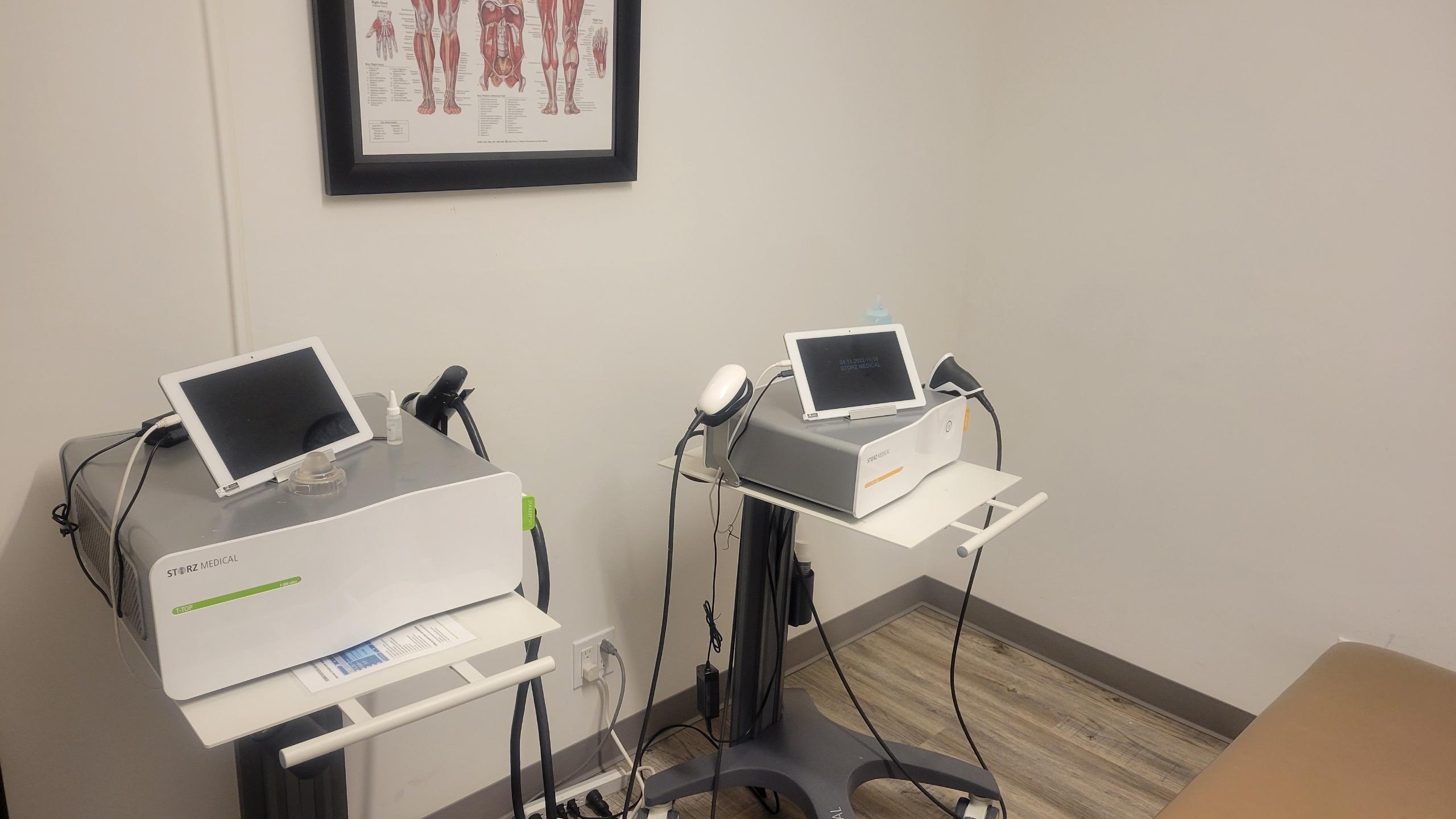
Focused ESWT vs. Radial Pressure Wave
Focused extracorporeal shockwave therapy and radial pressure-wave treatment sit within the same broad category, but they do not create the same treatment field. The practical question is not which label sounds stronger—it is which device, applicator, depth, and field match the diagnosis and intended target.
Terminology
Is EPAT the same as shockwave therapy?
The terms ESWT, EPAT, radial shockwave, pressure wave, and focused shockwave are often used inconsistently. EPAT is commonly used as a commercial or clinical label for radial pressure-wave treatment. It should not automatically be treated as synonymous with focused ESWT.
Ask what device and applicator are being used, how the energy is generated, and what treatment field is intended. Those details are more useful than a marketing label.
Focused ESWT
Defined focal zone at a selected depth
Focused systems concentrate mechanical energy within a defined focal treatment zone. Depending on the device, focused shockwaves may be generated electrohydraulically, electromagnetically, or piezoelectrically. Focal depth, focal size, energy, and waveform are device- and applicator-specific.
Radial Pressure Wave / EPAT
Broader field, strongest near the applicator
Radial devices commonly use compressed air to accelerate a projectile against an applicator. The resulting pressure field is greatest near the applicator and distributes energy through a broader, generally more superficial region.
At-a-Glance Comparison
Match the treatment field to the clinical target.
| Question | Focused ESWT | Radial pressure wave/EPAT |
|---|---|---|
| Energy distribution | Defined focal treatment zone | Broader distribution, greatest near the applicator |
| Targeting | Selected depth and focal zone | Broader, generally more superficial field |
| Generation | Depends on focused device technology | Commonly pneumatic applicator |
| Selection | Localized, depth-specific target | Broader or superficial treatment field |
| Clinical decision | Based on diagnosis and target | Based on diagnosis and treatment field |
CityIR Position
Focused when the target is localized and depth-specific.
CityIR generally favors focused ESWT when an examination identifies an appropriate localized, depth-specific target. Radial pressure-wave treatment may be useful when the intended treatment field is broader or more superficial.
That preference is not a universal superiority claim. The right selection depends on the diagnosis, tissue depth, anatomy, treatment field, available device, clinical goal, and how treatment will be integrated with rehabilitation.
Treatment Is More Than a Device
Technology should support a plan—not replace one.
Shockwave may be combined with progressive loading, strength and capacity work, activity modification, and functional reassessment. A predetermined series is not appropriate for every patient or every tendon.
What the Evidence Says
Diagnosis-specific results—not a universal winner.
Individual randomized trials have favored focused ESWT for plantar-fascia presentations, lateral elbow tendinopathy, and longer-term outcomes in noncalcific rotator-cuff tendinopathy. Another randomized patellar-tendinopathy trial found no significant difference between focused and radial treatment.
These findings should not be combined into a claim that focused ESWT is always superior. Trials differ in diagnosis, device, dosing, comparators, and follow-up.
Evidence reviewed: plantar calcaneal-spur trial, lateral epicondylitis trial, rotator-cuff trial, and patellar-tendinopathy trial.
Questions to Ask
Look past the word “shockwave.”
- What structure and depth are you intending to treat?
- Is the target localized or is a broader field intended?
- Which device and applicator will be used?
- Why is focused or radial treatment being recommended for this diagnosis?
- How will treatment be combined with rehabilitation?
- What functional outcome will be reassessed?
Start With an Examination
Choose the treatment field after the target is clear.
A CityIR evaluation can determine whether focused ESWT, radial pressure-wave treatment, progressive rehabilitation, another approach, or referral is the appropriate next step. Focused ESWT is available through CityIR’s Manhattan office when clinically appropriate.