87050ab0 f783 4818 88fe 821b82204792

Plantar Fasciitis Treatment NYC: Shockwave Therapy Explained

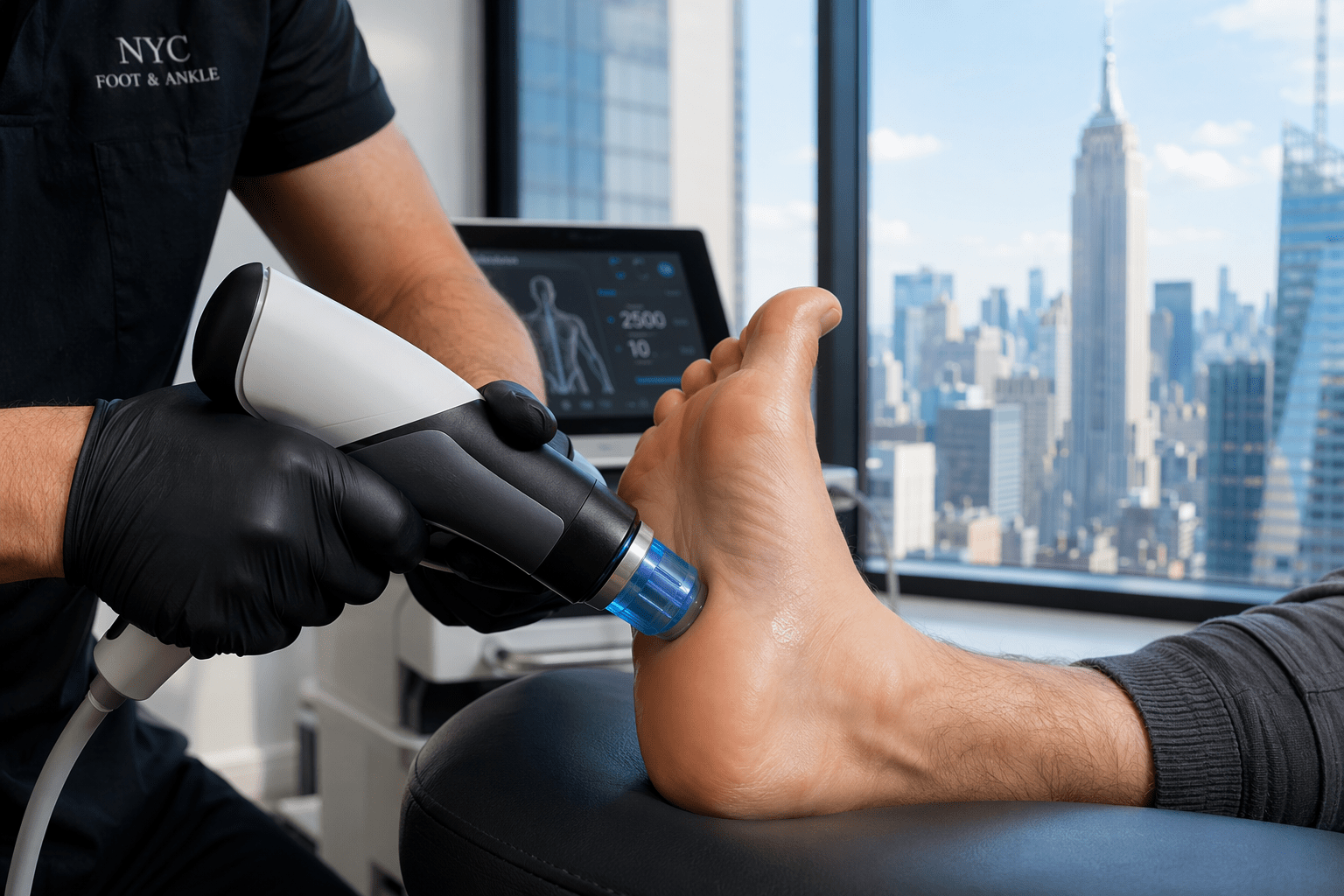
Shockwave therapy device treating foot

Key Highlights

  • If you feel heel pain in the morning, you may have plantar fasciitis.
  • Many people in New York and New York City have this issue and want to get quick help.
  • A lot of people try physical therapy to feel better and get back on their feet.
  • Shockwave therapy is also used to help heal the pain fast, without much downtime for you.
  • There are good care options for plantar fasciitis so you can feel good walking again around New York City.
  • Plantar fasciitis often leads to heel pain and foot pain for many people in New York City.
  • A lot of people get better with physical therapy, stretching, rest, and by wearing better shoes.
  • If the symptoms do not go away, shockwave therapy can help the area heal without the need for surgery.
  • City Integrative Rehabilitation does more than look at pain. They also check how you move, walk, and stand on your feet.
  • Their care brings together ESWT, DNS, and physical therapy. This helps make a better treatment plan.
  • People in NYC who have not gotten better with other care can book a visit at city-ir.com or stop by 420 Madison Ave.

Introduction

If you live in New York City and feel foot pain when you get up in the morning, it might be plantar fasciitis. This is a common problem that people in New York often feel, especially if they are on their feet all day and walk a lot. The pain can be sharp and make it hard to walk or even stand. If you feel like this, it may be time to talk to a specialist about your foot pain.

Plantar fasciitis can make daily steps hard. If you live or work in New York City, all the walking and standing can make foot pain feel worse. At City Integrative Rehabilitation, we help people with plantar fasciitis who have not got better with standard care. We look for what causes your pain to keep coming back. Then we make a plan using shockwave therapy, DNS, and physical therapy to help you feel better for good.

Understanding Plantar Fasciitis and Its Impact

Plantar fasciitis is a foot condition that happens when the plantar fascia, a band of tissue at the bottom of your foot, gets sore or hurt. People with this problem often feel heel pain, especially right when they get out of bed in the morning or after sitting for some time. The pain can feel sharp and makes it hard to walk.

If you feel heel pain in the bottom of your foot that does not get better, there could be a sign you need plantar fasciitis treatment. When the pain gets worse or keeps you from your daily life, it’s best to see a foot doctor in NYC. The sooner you get help, the sooner you feel better and get back to your day.

Plantar fasciitis is a common foot condition. It causes pain in the bottom of your foot. The pain comes from the plantar fascia. This is a thick band of tissue on the bottom of your foot. It goes from your heel to your toes. The plantar fascia supports your arch. It helps your foot move when you walk or run.

When this tissue gets sore, little tears and swelling can cause heel pain. You might feel it most with your first steps in the morning or right after you rest. If this seems like your pain, it is a good idea to look for plantar fasciitis treatment in NYC. You should do this before plantar fasciitis makes walking, exercise, or daily comfort hard for you.

Common Symptoms of Plantar Fasciitis

Plantar fasciitis is a problem that gives you heel pain and can make each step feel tough. A lot of people feel it most at the bottom of the foot, where there is a strong band of tissue that runs from your toes up to your heel. This pain can make your days feel long and bother your work or play.

When you have plantar fasciitis, there are some common things you might feel, such as:

  • A sharp pain in the bottom of the foot, near the heel.
  • That heel pain can feel worse right when you wake up and take your first steps in the morning.
  • The band of tissue under your foot can feel tight or sore during the day, after a long time on your feet, or when you stand up after sitting.

So, if you feel these plantar fasciitis symptoms, know that many people go through the same thing. It’s good to listen to your body, rest when you need, and talk to your doctor to feel better soon.

Most plantar fasciitis symptoms tend to follow the same pattern. At first, the pain starts out slowly but then gets worse over time. The plantar fascia is a band of tissue found under the foot. When this part gets irritated, you feel soreness near the heel or along the bottom of the foot.

You may notice:

  • The heel pain feels sharp when you take your first step out of bed.
  • The morning pain gets better after you start moving.
  • You feel pain after you sit for a while then stand up again.
  • There is tenderness at the bottom of the foot or in the arch.
  • Stiffness makes it hard for your foot to flex well.

As the condition gets worse, pain can come back after you do things or even happen when you walk like you always do. If you feel bad and it stops you from moving well, doing exercise, or working, it is good to see a doctor soon. This way, you can avoid taking a long time to feel better.

Who Is at Risk in NYC?

Living in New York can keep you on your feet for long periods of time. That is one of the risk factors when it comes to foot problems. Many people do not know they are at risk when they spend a lot of time walking around the city. Little things add up, like standing or not sitting enough during the day.

You can try a few things to take better care of your feet if you live in New York:

  • Make sure you wear good shoes that feel comfortable on your feet.
  • Try not to do too much physical activity without giving your feet a rest.
  • Take breaks when you can, especially if you feel any pain or see a problem with your feet or toes.

If you see changes in your feet or feel pain for several days, talk to a doctor. Taking steps now can stop bigger foot problems in the future. Keep an eye on the risk factors if you are in new york, and listen to what your body tells you.

In New York, plantar fasciitis is a problem for more than just runners. Anyone who stands or walks for long periods can get it. This can happen to people that commute, work many hours on hard floors, or do a lot of physical activity during the week.

Common risk factors include:

  • Tight calf muscles or a strain in the Achilles tendon
  • Flat feet, high arches, or too much rolling in of the foot
  • Jobs where you stand for long periods of time
  • Shoes with little support, especially on hard surfaces

Age can be important too. Many people who get foot problems are between 40 and 60 years old. But younger adults who are active may also get these issues. If you are in NYC and want to know who is at risk, here is the quick answer: those who put load on their feet again and again, have poor support, or move in ways that keep putting stress on the plantar fascia.

How Heel Spurs Relate to Plantar Fasciitis

Heel pain can be caused by many things. Two of the most common problems are plantar fasciitis and heel spurs. A heel spur is a type of bone sprout that forms on the heel bone and this can make the pain feel worse.

When you feel pain in your heel, it may feel sharp or dull. A lot of people get this in the morning or after standing for a long time. If you have signs like this, you should get checked out for plantar fasciitis and bone spurs to get the right help.

If you are in NYC and want to know where you can get help for both plantar fasciitis and heel spurs, there are many doctors and clinics to look into. A podiatrist or foot doctor in the city can help answer all your concerns and create a plan just for you.

Heel spurs and plantar fasciitis are linked, but they are not the same. Heel spurs are bone spurs. These can form at the spot where the plantar fascia joins the heel bone. They might show up over time if that area keeps getting hurt or stays sore.

Here is the key point: many people feel heel pain from plantar fasciitis, not from the spur itself. In simple words, the sore tissue is often what gives people their main signs. That is why working on just what you see in a picture and not how the foot moves can miss the real problem.

If you need help with plantar fasciitis and heel spurs in NYC, you want a clinic that looks at both your sore tissue and how your body moves. At City Integrative Rehabilitation, they check your pain, how you walk, and the way you step. This helps them make a good treatment plan for you.

Causes and Diagnosis of Plantar Fasciitis in New York City

If you feel pain in your heel, you might have plantar fasciitis. In New York City, foot specialists often start by asking about your symptoms. They will look at how you walk and feel your foot. Sometimes, they may use X-rays just to be sure.

After this, your doctor will make a treatment plan for you. The plan could include exercises, better shoes, or maybe insoles. Each person is different, so your treatment may not be the same as someone else’s. If you want help, foot specialists in New York can answer any questions you have.

The cause of plantar fasciitis is not always just from using your feet too much. For many people in New York City, several things can come together to cause it. Tight calf muscles, shoes that do not support your feet, overpronation, doing the same movement again and again, and being on hard surfaces for a long time can all make the problem worse. Old injuries can also lead to plantar fasciitis.

So how do NYC clinics find out if you have plantar fasciitis? Foot specialists look at your symptoms, your medical history, and do a hands-on check. At City Integrative Rehabilitation, we also watch how you walk and move. The treatment plan works best when we see why the tissue is under too much stress from the start.

Identifying Gait Abnormalities and Movement Dysfunction

Gait abnormalities are problems with the way people walk. This can happen for many reasons. A person’s medical history can tell a lot about why there is movement dysfunction.

If you feel like there is a change in how you walk, a physical therapy expert can help. They can use what they know about your health and check your legs and feet. By looking into your medical history, they can find the main reason for your movement problems.

Physical therapy has simple exercises to help people move better. The goal is to make it easier for you to walk and feel good to get back to doing things you like. If you notice new issues with your gait or feel pain, it’s best to get help as soon as possible.

A root-cause way starts with one simple question: why does your plantar fascia feel so much stress? The answer is often in how you walk or move. If your arch goes down too much, your foot rolls in a lot, or your stride puts too much load on your heel, the pain can keep coming back.

During your visit, we will go over your medical history. We also talk about your symptoms, what you do at work, what shoes you wear, and how active you are. After that, we look at how you stand and walk. We will see how you move your weight from one side to the other. This helps us find out if the trouble is only in your foot or if it comes from your calf, hip, or how you move as a whole.

That information helps shape the care you get. We do not just use pain relief on its own. Instead, we use it to help guide shockwave therapy, physical therapy, and DNS-based rehab. This way, your body can move with less stress and get better support.

Comprehensive Clinical Evaluation Process

Plantar fasciitis is a common foot problem that can cause a lot of pain, especially in the morning or after standing for a long time. In New York, clinics like New York Bone & Joint Specialists look at your symptoms closely. A clinical evaluation often includes a series of simple checks. A physical therapist may feel your foot, ask where the pain is, and watch how you walk. Sometimes, your therapist will ask about your shoes, how much you walk, or stand each day to give better advice for your foot care.

A doctor or a physical therapist will want to rule out other reasons for your pain. They may use their hands to feel your foot or ask about your work, shoes, and daily habits. A clear clinical evaluation will help the medical team find the best way for you to feel better. They might talk with you about stretch and rest, which are small things that can make a big difference.

Steps During Foot Pain Checkup

What Happens

Check foot and talk about pain

Local feel & pain

Watch walk and look at shoes/habits

Movement & daily use

Find good care plan after evaluation

Steps to feel well

A good clinical checkup does more than just show pain at the heel. It also looks at how all parts of the body move and work together. Many providers in new york, such as podiatry specialists and new york bone & joint specialists, start with going over your symptoms and doing a physical exam. At City Integrative Rehabilitation, we also look at how you move during these checks.

Here is what you may find in a normal clinical evaluation:

Evaluation Step

What It Helps Identify

Symptom review

Morning pain, first steps pain, pain after rest, activity limits

Medical history

Prior injury, footwear habits, work demands, exercise load

Palpation and exam

Tender areas, stiffness, arch stress, soft tissue irritation

Gait review

Overpronation, poor loading, altered walking mechanics

Physical therapist assessment

Weakness, mobility limits, movement compensation patterns

This type of foot care checkup can help you know how clinics in NYC usually find out if you have plantar fasciitis. The goal is not only to tell you what is wrong. It is to make a treatment plan that fits you and what your body needs.

Role of Imaging and Assessment

When you visit a doctor, they will start by asking about your medical history. This is a good way for your doctor to know what problems you have had in the past and what you feel now. It helps them understand more about your health.

Next, the doctor might use imaging. This means they use pictures like X-rays or MRIs to see inside your body. These pictures give a clear look at what is going on. Imaging, along with their face-to-face assessment, helps them find out what could be wrong.

After this, the doctor will set up a diagnosis and decide on a treatment plan that fits you best. A treatment plan shows what steps will help you feel better. Your medical history helps doctors pick plans that work best for you and fit your needs. This way, you always get the care that matches your case.

Imaging can be useful, but it is not the whole story. A good diagnosis starts with your symptoms, a physical exam, and your medical history. If your pain matches plantar fasciitis, then this kind of checkup may help show what is going on.

Sometimes, imaging can be helpful if your provider wants to see if you have heel spurs, a stress injury, or some other reason for your foot pain. Imaging can help find the cause. But, it should not take the place of a hands-on checkup. A picture by itself does not show how you walk or why the tissue in your foot keeps getting too much stress.

Assessment is important because it helps us know what is wrong. At City Integrative Rehabilitation, imaging results are read together with movement tests. This way, your treatment plan works on both the spot that hurts and the way your body moves.

Traditional Treatment Options for Plantar Fasciitis

If you are dealing with plantar fasciitis in NYC, you have several good options to help your foot feel better. Physical therapy can be great for pain and can help you get back to daily life. A lot of people also start with conservative methods, like rest, ice, and special foot stretch exercises to ease the pain.

Some people find that custom orthotics are the best way to feel good on their feet again. A mix of these plantar fasciitis treatment choices often gives the best results. Your doctor can help you know what can work best for your needs.

Many people with plantar fasciitis feel better with conservative methods, especially if they start care early. In NYC, common plantar fasciitis treatment options are rest, stretching, ice, wearing supportive footwear, physical therapy, night splints, and custom orthotics. These treatments help lower strain and make the irritated tissue feel calm.

So, what are the best ways to treat plantar fasciitis in NYC? For many people, a mix of changing some activities, soft tissue work, and movement fixes can help. But if the pain keeps coming back or does not go away over time, you may need a more detailed treatment plan.

Rest, Stretching, and Physical Therapy Approaches

If you feel pain in your lower leg, your calf muscles may need help. You can feel better by following a few steps and using physical therapy. A mix of small changes in your day and treatment can really help you feel good again.

  • Take time to rest your leg. Do not push yourself too much.
  • Try some light stretching each day. This keeps your calf muscles from feeling tight.
  • A trained physical therapy expert can help you build up soft tissue and feel strong again.
  • You may want to put ice or heat on your leg for a short time to feel better.
  • Stay aware of what you feel in your muscles so you do not hurt them again.

Listen to your own body. By using these steps, your soft tissue and your calf muscles can heal and feel good again. Taking things slow and steady will keep you moving well and out of pain.

When heel pain begins, simple care can really help. Make sure to rest. This will stop repeated stress on the heel. Stretching can help release tightness in the plantar fascia and calf muscles. Physical therapy is also helpful. It helps to move better and puts less strain on the soft tissue that hurts.

Common early strategies include:

  • Take a break from what makes your pain worse for a short time.
  • Stretch the calf muscles and the plantar fascia.
  • Roll ice under the foot for 10 to 15 minutes.
  • A physical therapist can use massage techniques.
  • Do lower-impact exercise for now.

These steps can help many people feel good within a few weeks. Still, you need to do these steps often and work on the real reason for your problem. If you go back to the same bad habits, your symptoms might get better for some time, but they can come back later.

Custom Orthotics Offered by NYC Specialists

If you are in New York City and have plantar fasciitis, you may wonder about getting a custom treatment plan. Many foot specialists in New York can help with this. They will look carefully at your feet and talk with you about your pain.

NYC podiatrists often suggest custom orthotics because they can bring a lot of comfort. A personalized treatment plan may include custom orthotics made only for you. This way, the support is made to fit your foot shape to help you feel better.

If you feel pain from plantar fasciitis, it is good to reach out to the foot specialists in New York City. They know how to make a plan that fits you best. A good treatment plan can help you walk easier and feel less pain in your daily life.

Yes, NYC foot specialists can give you custom orthotics if you have plantar fasciitis. These special inserts are made to support your arch. They also help to take pressure off your heel and change how force moves in your foot when you walk or stand. For some people, these orthotics are a good part of their personalized treatment plan.

In New York City, you can get orthotics that are made just for you, or you can pick some good ones that are ready to use. The right choice often depends on how your foot is shaped and what problems you feel. If you have flat feet, high arches, or your foot rolls in, orthotics in New York can help a lot. It is very important that your shoes fit well, too. The orthotic needs to work with the shoes you wear every day.

Orthotics alone are often not enough. If you have problems with how you walk, feel stiff, or feel weak, they help more when you also get physical therapy and care that focuses on how you move.

Limitations of Conservative Treatments

If you’re dealing with plantar fasciitis pain, you might want to try some conservative treatments first. These treatments can help many people feel better. A common option is night splints. Night splints work by keeping your foot in the right position while you sleep. This can help stretch the foot and ease pain in the morning.

Some people also turn to corticosteroid injections. This is when a doctor injects medicine into your heel. It can make the pain less for a short time. But it isn’t a fix for the long-term, and you have to be careful because too many shots could harm your foot.

If your plantar fasciitis pain keeps coming back, a doctor might say you need a walking boot. A walking boot gives your foot support and protects it while you walk. It lets your foot rest and gives it a chance to heal. Trying these steps could help you feel better and get back to your usual activities.

Conservative treatments can be good for plantar fasciitis, but they have their limits. A lot of people try these usual ways for many weeks or even months. Still, they feel the plantar fasciitis pain. This can happen because the sore tissue may feel better for a short time. But the problem happens when the stress on the foot keeps going on and does not change.

Night splints, a walking boot, and good inserts can help lower stress and give more comfort. Corticosteroid injections are used to ease swelling too. Doctors do not give many of these shots because they might harm the tissue. These choices may make you feel better, but they do not always fix the damaged spot.

If you have chronic plantar fasciitis or feel pain that keeps coming back after you rest, stretch, or try other common steps, you may need a new approach. A good treatment plan for plantar fasciitis will help your body heal. It can also fix the real movement problems that cause the pain. With this, you go beyond just dealing with the symptoms.

Advanced Shockwave Therapy (ESWT) for Plantar Fasciitis at City Integrative Rehabilitation

Are you having a hard time with plantar fasciitis in New York City? Many foot doctors now use shockwave therapy, also called ESWT, to help with pain relief. This treatment can be a good choice if other methods have not worked for you.

Shockwave therapy is simple and often brings fast results. It wakes up the natural healing process to help people feel better. If you want to find a new way to feel good and be able to walk again in New York, talk to your doctor about this advanced option.

Yes, you can get advanced treatment for plantar fasciitis in New York City. One of the best options is shockwave therapy. This therapy, also called ESWT, is used for chronic plantar fasciitis. A doctor may suggest it if more simple care did not help. It works by sending sound waves into the painful spot. The sound waves help your body heal.

At City Integrative Rehabilitation, we offer shockwave therapy as one way to help with pain relief and healing. This treatment is good for people who do not want surgery or a long time off from daily life. ESWT is not invasive and works well when used with movement training and rehab.

How ESWT Activates Stem Cells and Growth Factors

Shockwave therapy, also called ESWT, is a new way to help the body heal. In this treatment, strong sound waves are sent into the body. This can feel a little strange at first, but many people say it does not hurt. A lot of people use shockwave therapy to feel better when they have pain or want to help an injury get well.

The healing process starts when the sound waves reach the sore area. They tell the body to wake up stem cells and push out growth factors. These things help the body make new, healthy tissue. Over time, this may help sore spots feel better.

Many people choose shockwave therapy because they want a good way to feel better without surgery. If you think about trying it, you can talk to your doctor. It is a safe and easy way for most people to help their body heal faster.

Shockwave therapy uses focused sound waves on the irritated tissue. This helps to start the healing process again when it has slowed down. For people with chronic plantar fasciitis, this is important. The tissue can stay sore and not heal all the way. Shockwave therapy can help with that.

At City Integrative Rehabilitation, ESWT helps the body use its own stem cells and growth factors right in the area that needs care. Put simply, the main idea is to get your natural repair response going. The aim is not to cover up symptoms, but to help the plantar fascia heal and grow back strong.

Shockwave therapy stands out from many other quick options. It helps your body heal deep in the tissue, while your rehab plan works on the reasons you got hurt. When you use shockwave therapy the right way, it can help you move from just less pain to real healing.

Regeneration of Damaged Tissue—No Surgery, No Downtime

If you are dealing with plantar fasciitis and live in New York City, there are good options for you. Many places now offer non-surgical plantar fasciitis treatment. One choice is shock wave therapy. This treatment gives a gentle burst of energy to the soft tissue in your heel.

Shock wave therapy can help speed up your healing process. It is not hard to get, and you do not need surgery. A lot of people like it because it helps you feel less pain and gets you back on your feet faster.

If you want pain relief for your foot problem in New York, talk to a doctor about plantar fasciitis treatment. They will help you know what option is best for you. A good place in New York City will have ways to help your foot feel better soon.

Yes, you can get non-surgical plantar fasciitis treatment in New York City. One of the main options is shock wave therapy. This is for people who want to avoid surgery. It also helps those who do not want to use a walking boot after an operation. With this, you can keep going about your daily life as much as possible.

The treatment helps the healing process in soft tissue that is damaged. This is important for people with chronic pain. Many feel they only get short-term pain relief, or they may think their only option is surgery. But with ESWT, there is no need to cut the tissue. It works from the outside to help your body start to repair itself. Over time, this can give better pain relief.

For many people, the main benefit is simple. There is not any cut made by surgery and you do not need time to rest in bed. You can still do your normal daily tasks while following a treatment plan that helps you heal better.

What to Expect During and After Shockwave Therapy

Shock wave therapy can help with foot pain and can fit into your treatment plan. The process uses sound waves to help the body heal. A doctor will tell you what to expect and how many times you need to go for this treatment.

  • It’s important to listen to your foot care expert and follow their advice every day. This helps the healing process.
  • Watch for changes in how you feel so you know if your foot is getting better or not. Call your doctor if something feels wrong.
  • Make small changes in your daily life. Wear good shoes and try not to put too much weight on your sore foot.

If you do these things and stay with your treatment plan, you should feel better soon. A good healing process takes time, but every step counts for healthy feet.

If you are thinking about getting shock wave therapy, you might want to know what happens during the visit. The doctor will do the treatment in the office and will focus on the spot on your foot that hurts. Since shock wave therapy is not surgery, it does not need a long time to heal. This makes it easier to fit into your daily life.

Your treatment plan may include:

  • A review of symptoms takes place, along with looking at how you walk and your foot care needs.
  • ESWT sessions are aimed at the painful part of the plantar fascia.
  • There will be follow-up rehab to help with the healing process.

After treatment, most people are able to get back to their normal routine without any big breaks. You might need to change or limit things like running or standing for a long time if those activities caused your problem. The goal is to give your foot time to heal. Rehab will help your body learn how to put weight on your foot the right way.

Integrative Rehabilitation Strategies at City-IR

If you are dealing with plantar fasciitis, finding the right treatment plan can bring you relief. The team at city-ir offers integrative rehabilitation. They work with you in every step of your physical therapy.

At city-ir, they use proven methods to help with pain and get you moving again. A good treatment plan can make a big difference. With physical therapy, the pain from plantar fasciitis can get better over time, and you will feel stronger.

Pain relief is just one step in getting better. At City-IR, integrative rehabilitation brings together care for damaged tissue and a plan to help your body move better. This is key in plantar fasciitis, since repeated stress can cause pain and keep bringing the problem back.

Our treatment plan can use ESWT, DNS, and physical therapy. It all depends on your symptoms and how you move. The team at City-IR brings these tools together to help you move better. The goal is to cut down on repeat strain and help you build a stronger path for lasting improvement.

DNS for Restoring Functional Movement

If you have foot problems, physical therapy can help. A physical therapist will look at how you walk and move. They use special tests to find what is wrong with your feet.

Physical therapy works to fix foot problems by focusing on functional movement. This means the therapist will help you do normal things. They want your feet to feel better so you can move well in your day.

The therapist may use something called DNS, which stands for Dynamic Neuromuscular Stabilization. DNS is a new way to help your body learn better movement patterns. This can help you feel better and help stop pain from coming back. A good plan from physical therapy will help you get back to your normal life.

DNS helps people in rehabilitation by making movement better. When you have plantar fasciitis, this is important. Many foot problems like this do not always start just in the foot. If you do not have good control of the trunk, hips, or lower body, it can change the way force goes to the arch and heel.

At City Integrative Rehabilitation, DNS is used with physical therapy, not instead of it. The main goal is to help your body move better, especially when you walk, stand, or do exercise. When this gets better, your foot can heal more easily, as it is not getting too much stress over and over.

This way of doing things can be good for people who have tried things like rest, shoe inserts, or stretching, but still feel stuck. Rehab needs to do more than just calm your pain or symptoms. It should help the way you move feel easier and better helped. This will keep you from getting the same kind of problem again.

Customized Physical Therapy Plans

If you have plantar fasciitis, you might wonder if you can get physical therapy at big hospitals in New York. The good news is that most of these hospitals offer care for this foot condition. They have teams to help people with different foot issues, and they know how to make the pain feel better.

With the right physical therapy, you can feel improvement. A doctor or therapist will create a personalized treatment plan that matches your needs. This plan may include exercises, stretches, and ways to ease the pain in your foot. Over time, you could feel more comfortable walking around the city.

New York is a great place for treatment options. You will find there what works best for you. A good treatment plan can help you get back on your feet fast and feel better about your daily movement. If you feel pain or need guidance, reaching out now may be your first step to recovery.

Physical therapy for this foot condition can be found all over New York. There are many major hospitals and specialty clinics that offer it. At City Integrative Rehabilitation, we give physical therapy as a part of a personalized treatment plan. This plan is for you, and we make it based on your symptoms, what we find in your tests, and what you do each day.

Some people need to work on moving better. Others need their calf and foot to be stronger. Some have to get soft tissue care or follow steps to get back to what they do. If you feel pain when you stand at your job, your treatment plan should match that. If you feel pain when you run, the plan should fit that too. A one-size-fits-all treatment plan does not work well for most people.

We want to make sure the rehab fits your body. This includes working on stiffness, weakness, sore tissues, and the way you move, all at the same time. For many people, physical therapy is what helps change short-term relief into steady recovery.

Addressing Root Causes for Long-Term Relief

Plantar fasciitis can give you pain in your heel and slow you down. If you feel sore in your feet a lot, you might have chronic plantar fasciitis. It is a common issue, but there are ways to feel better.

Some root causes for this kind of pain can start in other parts of your body. When your calf muscles are tight, they can pull on your heel and make your foot hurt even more. You may also feel back pain because of the way you walk or stand if you are dealing with plantar fasciitis.

To get long-term relief, you have to take care of more than just your feet. Loosen up your calf muscles with easy stretches. Watch your posture to help cut back pain. With time and care, you can feel good on your feet again.

Chronic plantar fasciitis can last a long time because what causes it is still there. Tight calf muscles often add to the problem. Putting too much weight on your feet over and over, poor arch support, and how you walk can all keep pulling on the tissue every day. If these things do not change, the pain from plantar fasciitis can come back even if you feel better for a while.

That is why our group looks at more than just the pain under your heel. We check how your whole body moves as one system. In some people, stress in the foot that is not treated can lead to back pain. It can also change the way you walk. Over time, this can cause other problems, too.

Long-term relief can come when you help the plantar fascia heal and also make changes to how the foot works. If you lower stress on the foot, give it good support, and teach the body new ways to move, the plantar fascia can feel better for a long time. This way, it can heal well and not feel bothered.

Why Choose City Integrative Rehabilitation for Plantar Fasciitis Treatment in NYC

If you are in New York City and need help with plantar fasciitis, the first thing to do is to look for specialists who give exceptional care. Many people in New York feel pain in the foot because of plantar fasciitis. You want a doctor who understands how foot injuries feel and knows which plantar fasciitis treatment can help you feel better fast.

City Integrative Rehabilitation in New York is known for its friendly service and expert team. They make sure each person gets the right care plan and feel comfortable from the first visit. If you are searching for good plantar fasciitis treatment in New York City, they are a top choice for people who want to feel well and get back to their daily life.

If you are looking for NYC specialists who can help with plantar fasciitis, you should find a team who looks at pain, movement, and how your body works all at once. At City Integrative Rehabilitation in New York City, you will get this type of care. This team helps people with plantar fasciitis who tried to feel better before but did not see results. It is a good place to try for plantar fasciitis treatment in New York.

We use a care plan that puts you first. Our goal is to give you the best care and make sure it works for your needs. We do not just try one thing, then another. Instead, we use a plan that makes sense. This can have physical therapy, ESWT, or DNS. These help treat your pain and also find out why it does not go away. With this plan, you get strong support every step of the way.

Experienced Specialists and Manhattan Location

If you are looking for good foot care in New York City, you will find many trusted specialists in midtown Manhattan. They help people with many foot problems, from small pains to bigger issues. These specialists know how to make your feet feel better.

Many people in New York have busy lives and spend a lot of time walking. A foot care expert in midtown Manhattan can look after your feet. They do this every day and understand the needs of local people.

Do not wait until you feel real pain. It is better to see someone early so they can help you feel good and stay on your feet. A visit to a New York City foot care specialist can make a big difference for your day.

Where you are can make a difference if you have heel pain every day. City Integrative Rehabilitation helps people in New York and New York City get the care they need. The office is at 420 Madison Ave. This is a good spot for people who work or live near there.

You need people who know foot care and do not just deal with one small part of it. Our team looks at how the tissue is healing, the way you walk, and what you need to get better. We do this all together. This can help a lot if you have had your problems for months or if they come back after you get a normal treatment.

For people in Midtown Manhattan, you will get the right help without having to travel far. The support is close to where you are. You can have a plan that fits how you live and move each day. It’s not just about what hurts during a short visit to the doctor.

Walk-In Appointments and Full-Service Care

If you are dealing with plantar fasciitis in New York City, you may want to know about your choices for treatment. A lot of clinics in the city offer walk-in appointments. This lets you get help when you need it, without having to wait for days.

Many clinics offer full-service care to help you feel good and walk easy again. They know how painful plantar fasciitis can be. With the right care, you can get back on your feet and feel better.

In New York, you will find several places that care about giving you exceptional care for plantar fasciitis treatment. If you are not sure about the next step, you can always drop by or call for walk-in appointments. This way, you can get the help you need, right when you want it.

Many people want to know if they can get walk-in appointments for plantar fasciitis treatment in New York City. This can be different depending on the clinic and their schedule. It is a good idea to call the office before you go. If you feel your heel pain is getting worse, contact them early. This will help you get the care you need for plantar fasciitis in New York.

What matters most is to be seen fast and get full care when you walk in. You need someone to look at your situation, explain what is wrong in simple terms, and help you find the right treatment. Many times, people go from one short-term fix to another and do not have a clear plan.

At City Integrative Rehabilitation, we focus on giving people exceptional care. This care starts with your first checkup and goes on through rehab. If you have tried other treatments and they did not work, and now want a more complete way to feel better, you can book ahead easily at city-ir.com.

Book Your Consultation at 420 Madison Ave or Online

Looking for help in New York City? You can find support online today and feel at ease from the start. Many experts want to help you feel your best, and it is easy to book your consultation.

Here is how you can get started:

  • Sign up for your first appointment today—it’s quick and easy.
  • Pick a time that works for you, then get ready for real answers.
  • Don’t wait. A happier you is waiting in the heart of New York.

Be one of the many people in new york who feel better when they get help online. Anyone can take this first step today. A better way of life is just a hello away—online or in person.

If you have plantar fasciitis and it makes your work, workouts, or day feel hard, now is the time to do something about it. City Integrative Rehabilitation helps people in New York City who want to fix the main cause without surgery. This is better than just covering up the problem for a short time.

You can make an appointment for your consultation at a time that works best for you.

  • Visit us at 420 Madison Ave in Manhattan
  • Book online today at city-ir.com
  • Request an appointment today for ESWT, DNS, or physical therapy

The sooner you get checked, the sooner you stop guessing what your foot needs. It does not matter if your pain started today or you have had it for months. Our team can make a plan for you. This plan will focus on healing, moving better, and giving more steady relief.

Frequently Asked Questions

Knowing more about plantar fasciitis can really help you with your treatment. A lot of people ask how shockwave therapy (ESWT) works to heal hurt tissue without any surgery or downtime. People also want to know how things like walking style or movement issues play a role in heel pain. Our team looks for what is causing the problem and builds a treatment plan just for you. If you are in NYC and feel heel pain, you can get help in Midtown Manhattan at 420 Madison Ave. Want to feel better? Visit city-ir.com to book your appointment today and learn more about our help for plantar fasciitis.

Is Shockwave Therapy safe and effective for plantar fasciitis?

If you want to feel better from plantar fasciitis, shockwave therapy can be a good choice. The foot specialists use this method to help with pain relief and help start the healing process. It is a safe way to get you back on your feet, so you can enjoy your day without foot pain.

Shockwave therapy is often used for chronic plantar fasciitis that does not get better with basic treatments. It is not surgery. Foot specialists use it to help the healing process and to give more pain relief by helping the tired tissue repair itself. This way, people with plantar fasciitis can feel better without having to go through an operation.

How long does recovery take after ESWT treatment?

ESWT can be a key part of your treatment plan for your foot condition. It helps speed up the healing process. Many people find that they feel better and can get back to their daily life sooner. Talk to your doctor about how ESWT may fit with your plan and help with your foot condition.

Recovery after ESWT can be different for each person. It depends on how bad your foot condition is and the treatment plan you follow. A lot of people go on with their daily life and do not feel much change right away. The healing process goes on, and your tissue gets better as time passes. When the foot gets less stress from how you move, you will see more improvement.

Do you treat heel spurs together with plantar fasciitis?

If you feel pain in your foot, you may have plantar fasciitis or heel spurs. A foot specialist can help. A good treatment plan is important to deal with pain from these bone spurs. The right care will help you feel better, move well, and get back to your normal day.

Yes. A lot of people get heel spurs and plantar fasciitis at the same time. Because of this, foot specialists should check for both. You may have bone spurs, but you still need to look at the sore tissue and how you move. A good treatment plan will help with the heel, the fascia, and what causes the overload.

Conclusion

In summary, getting rid of plantar fasciitis takes more than just standard treatments. At City Integrative Rehabilitation, we look for the cause of your pain, like how you walk and move. Our Shockwave Therapy wakes up your body’s healing system. It helps your tissue grow back and does not need surgery or a long break. Along with our personalized physical therapy and DNS plans, you can feel more ease from pain that stays with you. If you are in NYC and feel that usual treatments have not worked, reach out to us. Set up a visit now at city-ir.com or stop by at our Manhattan spot at 420 Madison Ave. A way to feel better starts here!

Physical therapist recommendations for plantar fasciitis suffer-er?

A physical therapist may recommend specific exercises to strengthen the foot and calf muscles, as well as techniques to improve flexibility. They might also suggest ice therapy, manual therapy, and custom orthotics to alleviate pain. Always consult a professional for personalized treatment plans tailored to individual needs.

51d786b0 a7be 4155 9cee 0108b33916c5
047fe508 5658 409e 9a46 8c76c4ea6575
c7c19121 5ee4 429b 80a3 d649965d78fb
7f434239 765a 4813 a648 4fc6cc86088a

Have questions about your symptoms?

Our team can help you understand what is going on and which approach fits. Reach out to schedule a visit at one of our New York locations.

Book an AppointmentView Locations

Leave a Comment

Your email address will not be published. Required fields are marked *