
Conditions We Treat · Shockwave · Treatment
VAX-D vs. DRX9000: What Patients Should Compare
In this article
The most important distinctionWhat the published evidence can—and cannot—tell usWhy CityIR uses VAX-DQuestions to ask before choosing a decompression providerCompare the protocol, not just the brand namePrimary records and research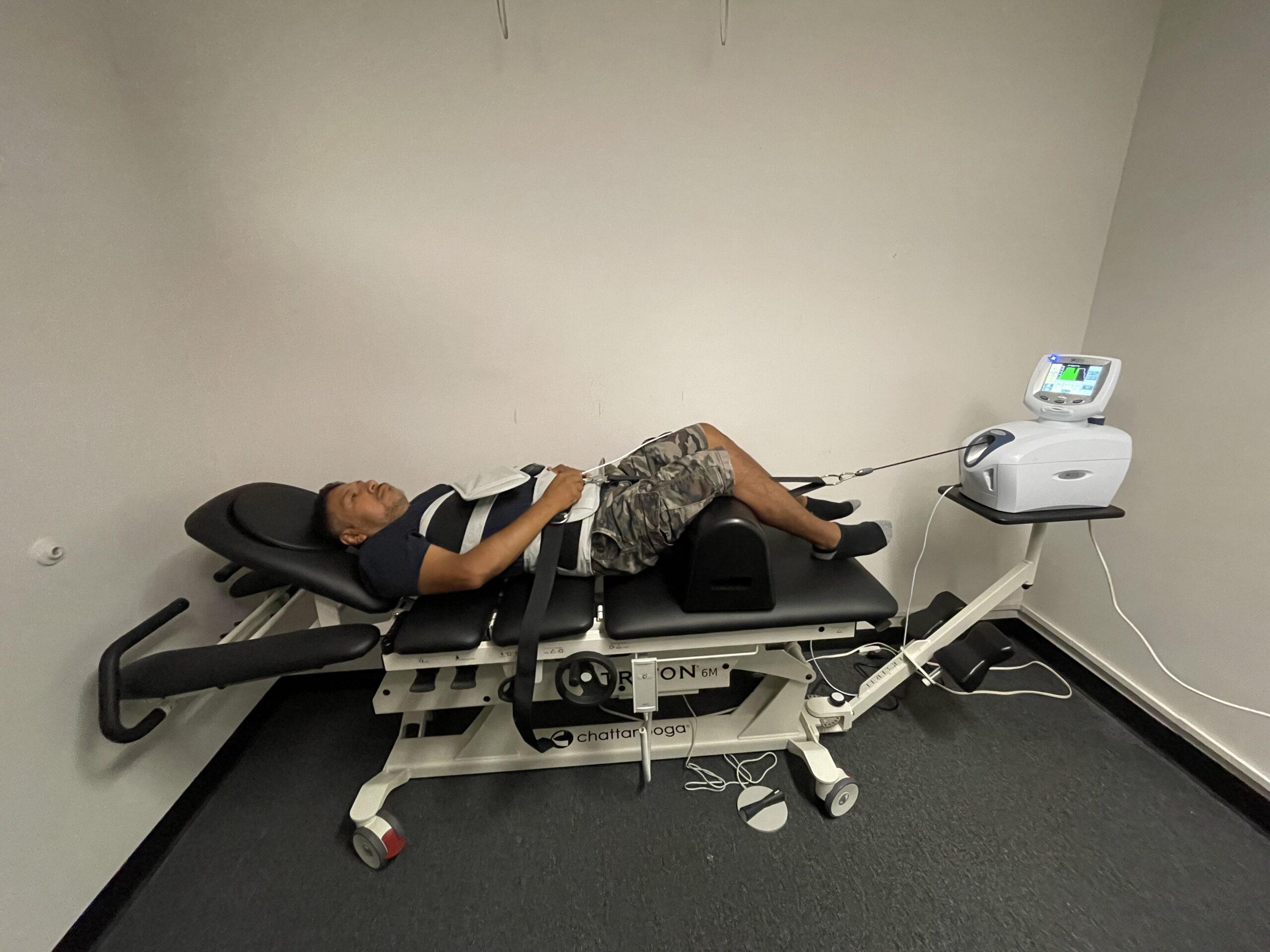
VAX-D and DRX9000 are branded powered-traction systems used in non-surgical spinal-decompression settings. They are not identical, but FDA clearance and different engineering designs do not establish that one system is universally better for every person with back or leg symptoms.
CityIR uses the VAX-D G2. This page explains that practice choice, the device features patients can verify, and the limits of the available comparison evidence.
The most important distinction
The exact device and treatment protocol matter. “Spinal decompression” is a broad marketing term, so patients should ask which table is being used, how the protocol is selected, what diagnosis is being treated, how progress will be measured, and what would cause the plan to change.
| Question | VAX-D | DRX9000 |
|---|---|---|
| FDA device category | Class II powered traction equipment | Class II powered traction equipment |
| Documented configuration | The FDA summary describes a prone, split-table system using a pelvic harness, measured distraction tension, timed distraction-relaxation cycles, and a patient-held release. | The FDA records describe a powered spinal-decompression/traction system for specified low-back-pain and sciatica-related uses. |
| What clearance establishes | The device may be legally marketed for its cleared use. Clearance does not prove universal superiority, guarantee an outcome, or replace diagnosis and clinical selection. | |
| CityIR availability | CityIR uses VAX-D G2. | CityIR does not provide DRX9000 treatment. |
What the published evidence can—and cannot—tell us
Published VAX-D research includes an older randomized comparison with TENS and prospective observational studies involving selected patients with chronic low-back pain, sometimes with referred leg pain. Those studies reported improvements in pain or function in their study populations.
The limitations matter: protocols, eligibility criteria, outcome definitions, follow-up, and study design vary. A prospective VAX-D case series specifically cautioned that causal conclusions require randomized comparison groups. The available records reviewed for this page do not provide a direct VAX-D-versus-DRX9000 clinical trial establishing that either device is universally superior.
Why CityIR uses VAX-D
CityIR selected VAX-D G2 because its prone, measured distraction protocol is the system the practice has chosen to integrate with examination, rehabilitation, and progress tracking. That is a transparent practice preference—not a promise that the device is right for every diagnosis or every patient.
Before recommending a course of care, CityIR evaluates the symptom pattern, examination findings, functional limitations, prior care, and relevant imaging when available. Treatment should continue only when the response and agreed goals justify it.
Questions to ask before choosing a decompression provider
- What exact device and model will be used?
- What diagnosis and clinical findings make this approach reasonable?
- How will pain, function, and activity tolerance be measured?
- What alternatives are appropriate?
- When will the plan be modified or stopped?
Compare the protocol, not just the brand name
For CityIR, the decision is not based on a slogan such as “original,” “real,” or “best.” It is based on using a known VAX-D protocol, selecting patients through an examination, and measuring whether the plan is helping the goals that matter to that patient.
Request a CityIR evaluation or learn more about VAX-D spinal decompression at CityIR.