
Sports Rehabilitation · Treatment
Corrective Exercise NYC: Personalized Solutions for Pain Relief
In this article
Key HighlightsIntroductionUnderstanding Corrective Exercise in NYCCommon Movement Dysfunctions and Imbalances AddressedThe Assessment Process at City Integrative RehabilitationTypes of Corrective Exercises OfferedWho Can Benefit from Personalized Corrective Exercise ProgramsWhat to Expect During a Corrective Exercise Session in Manhattan, Great Neck, Huntington, or NesconsetConditions Successfully Managed with Corrective ExerciseWhy Choose City Integrative Rehabilitation for Corrective Exercise in NYCCorrective Exercise in ActionConclusionFrequently Asked QuestionsReady to Move Better and Move With More Confidence? Book an Appointment Today!Have questions about your symptoms?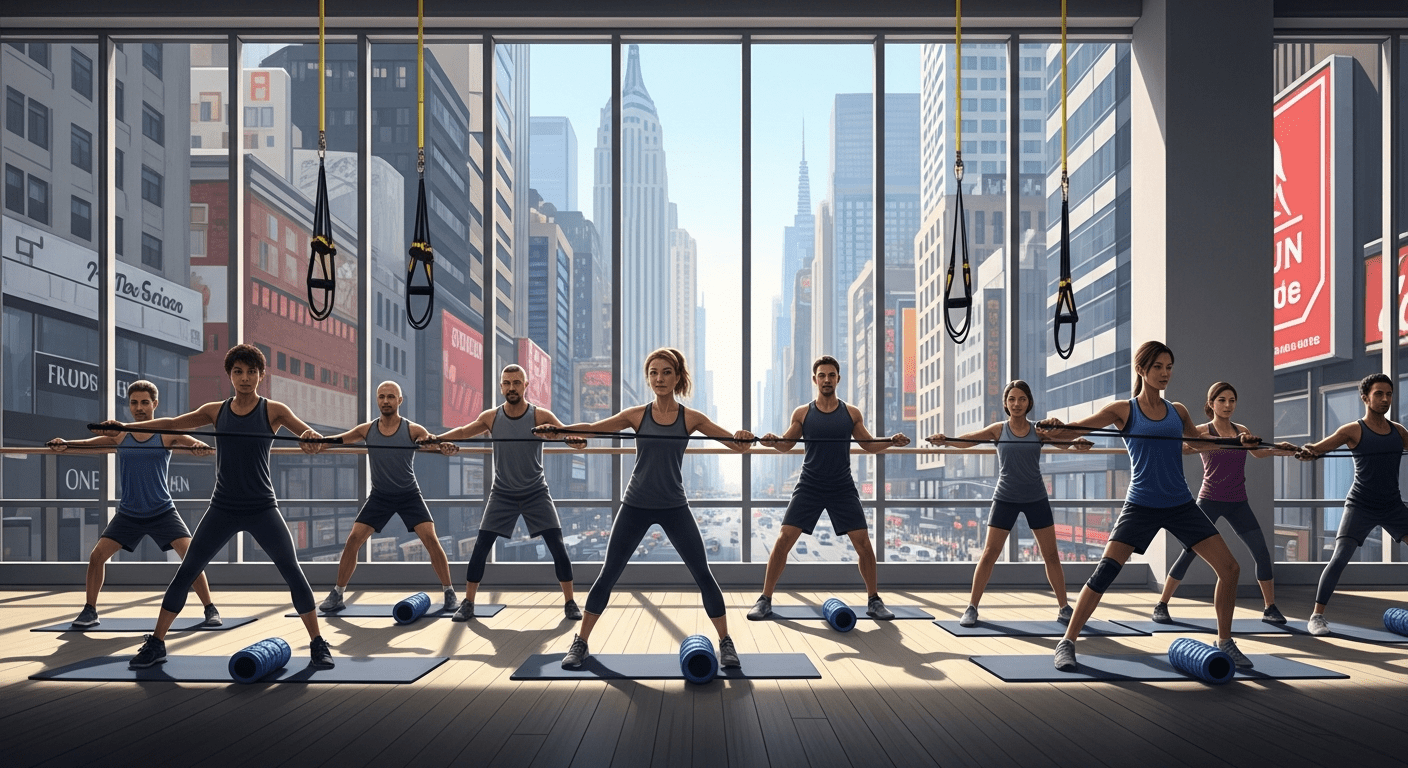
Key Highlights
Here are the key takeaways from this guide on corrective exercise:
Corrective exercise helps you find and fix faulty movement patterns and muscle imbalances that lead to pain. This is not like general fitness. It focuses on the main reason for your discomfort. Because of this, you get lasting pain relief.
In NYC, the usual cost for corrective exercise is between $100 and $200 for each session. The price can be higher or lower based on who you work with and where they are. You may get lower rates for more than one session if you book a package or join a small group class.
- Corrective exercise helps find and fix faulty movement patterns and muscle imbalances that cause you pain.
- This is not like general fitness. It looks at the main reason for your discomfort, so you get lasting pain relief.
- Our process starts with a full checkup. We do Functional Movement Screening to help us make a program that fits you.
- It works well for back pain, poor posture, and sports injuries that keep coming back.
- A program made just for you will make your movement quality better, help you do more, and keep future injuries away.
- Our specialists use a hands-on, clinical approach at our Manhattan, Great Neck, Huntington, and Nesconset offices.
Introduction
Do you feel tired of pain that stops you from having fun in New York City? A lot of people feel pain that does not go away, no matter what they do. The answer might not be to stop moving, but to move in a better way. Corrective exercise can help with long-term pain relief by working on what is really causing your pain. This is not just about treating the signs you feel. With this specialized approach, you fix faulty movement patterns. This helps you get a body that is strong and can handle more every day. If you stay in New York, this can help you feel well and live your life.
Understanding Corrective Exercise in NYC
Corrective exercise is all about finding and fixing problems with the way your body moves. It looks for places where movement patterns are off and helps get them back on track. You can think of it as a way to reset your movement so your body works well again. This method helps give pain relief and helps you feel better.
At City Integrative Rehabilitation, we use corrective exercise to help you move with ease. Our goal is for you to feel no discomfort when you move. In the next sections, we will talk about what corrective exercise is. We will also share why it is important for your well-being. Plus, we will show how it is not the same as other types of training.
What is Corrective Exercise and Why Is It Important for Pain Relief?
Corrective exercise is a step-by-step way that helps with muscular imbalances and bad movement patterns. When your body tries to make up for weakness or tightness, it can end up moving in ways that are not good. This can cause chronic pain and make the risk of injury higher. Corrective exercise works to fix these problems that are not seen right away. It helps improve movement patterns, movement quality, and lowers the chances of getting hurt.
The main goal of corrective exercise is to help you move better and feel good. A specialist will look at which muscles in your body are used too much and which are not used enough. Then, they use this to make a plan that helps your body feel more balanced. When you focus on the main cause of your pain, you can get long-term pain relief. This is why corrective exercise is important.
The exercises do not just cover up your symptoms. They help your body learn the right way to move again. This can make your joints work better and take away some of the strain. In time, you can take part in daily activities and sports with less pain. It helps you build a strong and steady base for all the ways you move.
How Corrective Exercise Differs from Regular Personal Training or Therapy
While a personal trainer often helps people reach goals like losing weight, gaining muscle, or getting more fit, a corrective exercise specialist aims for something else. The main goal of the corrective exercise specialist is to find and fix movement dysfunctions. To do this, they need to know more about how the body moves and how the muscles work. A corrective exercise specialist builds a plan that targets the imbalances you have and helps you feel and move better.
Corrective exercise is like a link between physical therapy and regular training. A physical therapist helps you with an injury so you can get better. On the other hand, a corrective exercise program helps you in the last part of getting better and also helps stop future injuries before they appear.
This approach is all about finding out what you need and making a plan just for you. It is not the same for everyone. The coach will pick each exercise to help improve your movement quality. You also build strength in a safe way, with a good base to start from. A regular fitness plan may not give you this kind of care.
Common Movement Dysfunctions and Imbalances Addressed
Daily life in a busy city can lead to many movement dysfunctions. When you sit for long hours or do the same motion again and again, it can cause muscle imbalances. Even old injuries can add to the problem. This often leads to improper posture, chronic pain, or trouble moving.
The main cause of these problems is faulty movement patterns. Corrective exercise helps to find and fix these issues, like rounded shoulders or a weak core. We will talk about common problems that people in NYC face. You will also see how our way of working goes after the real cause of the problem and helps to make the movement patterns better.
Typical Issues for NYC Residents: Posture, Muscle Imbalances, and Injuries
Life in New York can mean you spend long hours at a desk. You may have long trips to work and feel a lot of stress. All these things are hard on your body. This way of living can give you muscle imbalances and make it hard to move well. These movement restrictions are common in many people here in New York.
Many people we help have body problems that come from living in the city. A lot of them feel lower back pain from sitting too much. Some get neck and shoulder tension called “text neck.” A few have tight hips as well. These issues can give you discomfort. They can also make your body more likely to get hurt or increase your injury risk.
We frequently address the following conditions:
- Forward Head Posture: This is when the head sticks out in front, which puts stress on the neck muscles.
- Upper Crossed Syndrome: The shoulders are rounded and the upper back is bent forward in this case.
- Lower Crossed Syndrome: Here, the lower back curves too much, and the core muscles do not do much work.
- Knee Valgus: Knees fall in toward each other when doing things like squats.
- Limited Ankle Mobility: This often happens from wearing some types of shoes.
How Corrective Exercise Addresses Contributing Movement Factors
Pain is often a sign that something else is wrong. For example, you might feel knee pain, but the real problem is not always your knee. It could be your weak hips or tight ankles that are not moving right. These things can create faulty movement patterns. If you only treat the knee pain, you may feel better for a bit, but the pain will come back. That is because you are not getting to the real cause. The problem stays if you do not fix the underlying movement patterns.
Corrective exercise is not the same as other types of workouts. It works like detective work for the body. A specialist will first do a careful check to identify relevant movement and loading factors. Then you get a plan that helps to fix those exact imbalances and issues in your body. This is why corrective exercise is good for helping your symptoms.
This focus on the source is what brings long-term results. When you retrain your body to move the way it should, you do more than help your pain go away now. You also make your body stronger and less likely to have trouble later. This healing process helps you feel better and gives you a body that works well.
The Assessment Process at City Integrative Rehabilitation
A good corrective exercise program starts with a clear and full assessment. We do not guess what is wrong. We use proven ways to check your body’s functional movement. This helps us see the full picture. This first step is so important for making a plan that is just for you.
Our team brings strong know-how about anatomy. We also use cutting-edge tools to check how you move. In the next parts, we will talk about how we use methods such as the Functional Movement Screen (FMS), Anatomy in Motion (AiM), and Dynamic Neuromuscular Stabilization (DNS). These methods help us build a clear path for you to have better movement and improve your functional movement.
Functional Movement Screening and Anatomy in Motion (AiM) Methodology
The Functional Movement Screen (FMS) is an important part of how we check your movement. It is a simple test that looks at seven basic movement patterns. These tests help us find limits, imbalances, and any parts of your body that do not move well. FMS does not tell you why you feel pain, but it does show how your movement quality is right now. This helps us know where you might get hurt if you don’t improve how you move. So, we can see what you need to work on to reduce your risk of injury and help your functional movement get better.
We use the Anatomy in Motion (AiM) method along with FMS. AiM is a strong way to look at how the entire body moves. This is done through gait analysis. It helps us see how your body has changed and made up for things over time. This also shows us how your movement patterns connect, from your feet all the way to your head.
This combined test gives us a full look at your own way of moving. It helps us make sure your plan starts with good and clear facts.
Assessment Tool | Purpose |
|---|---|
Functional Movement Screen (FMS) | Identifies limitations and asymmetries in seven fundamental movement patterns. |
Anatomy in Motion (AiM) | Analyzes gait to understand the body’s compensation patterns and interconnected movements. |
Dynamic Neuromuscular Stabilization (DNS) and Custom Evaluations
Another important part of our evaluation is Dynamic Neuromuscular Stabilization (DNS). This method comes from the idea that, as adults, our movement patterns come from the natural movements we learn as babies. DNS looks at how your brain and muscles work with each other to give your joints good stability when you move.
When the connection between your nerves and muscles does not work well, it can cause poor movement quality. This can make your body try to make up for the problem in other ways. Our specialists look at your current movement patterns and compare them to the stages you went through as you grew. This helps us see where your functional movement breaks down. The goal is to help your nervous system use the right muscles at the right time.
These new ways, along with other special checks based on your past and what you want, help us build a program just for you. This means we do not just work on the symptom. We help bring back the main parts of your body’s balance and control.
Types of Corrective Exercises Offered
Once we find the cause of your movement problems, we make a plan for you. We use different types of corrective exercise in this plan. Each one is a specific exercise that is picked just for your needs. This is not a random set of exercises. This is made for you to help fix what you need most.
Your plan will have some targeted stretching, some strength exercises, and new ways to move better. You will also get help with neuromuscular re-education. This will help you get used to new movement patterns. Let’s look at each of these in more detail.
Targeted Stretching, Strengthening, and Mobility Techniques
A good corrective program uses different steps to help your body feel better. It begins by helping the tight muscles relax. Then, it works to get the weak muscles active and strong. This way, your body can find balance again.
Targeted stretching and mobility work help improve muscle flexibility and let your joints move better. This can include ways to release tight hip flexors or help your thoracic spine move more. After we make more space for you to move, we add in strengthening exercises. These help weak muscles learn to work right and give your body more support. This helps you get better range of motion, muscle flexibility, and feel stronger overall.
Your program may include:
- Foam Rolling/Myofascial Release: This helps to calm down muscle tissue that is working too much.
- Static and Dynamic Stretching: You use these to stretch muscles that feel tight all the time.
- Activation Exercises: These get sleepy muscles, like glutes or core, working again.
- Integrated Strengthening: This helps all your muscles learn to move together as one for good movement.
Neuromuscular Re-education and Real-Life Application in Daily Activities
Getting better at flexibility and strength helps, but it is not all you need. The most important step is for your brain and muscles to learn how to work together in better ways. This practice is called neuromuscular re-education. It is about making your motor control better.
We help you get rid of old, faulty movement patterns. Instead, you learn new movement patterns that are good for your body. You will do special exercises to train your body to move better. These exercises will test your balance and how well you can control your body. With practice, the right muscles will start to work at the right time every time you move. Soon, these new movement patterns feel easy and natural.
The main goal is to use these better patterns in your daily activities. Better movement quality is not something you leave in the clinic. It should show in how you sit at your desk, lift groceries, or play your favorite sport. We help you bring these changes into your everyday life. This way, the benefits will stay with you and be useful for you.
Who Can Benefit from Personalized Corrective Exercise Programs
Almost everyone can get something good by working on how they move. Corrective exercise programs are made to fit different people. These programs help with pain relief, injury prevention, and better sports performance. They focus on your individual needs so you can improve your movement quality.
From people who play sports and want to get better to office workers who spend a lot of time sitting, this approach can help many. It gives good ways for each group to feel better. Below, you will see how each group can use corrective exercise to reach their health and fitness goals.
Athletes, Active Individuals, and Those With Recurring Pain
For people who work out or play sports, even small movement problems can slow you down and raise your injury risk. You may feel fit, but you may still have issues in your body that bring back pain or stop you from getting better in your training. Corrective exercise can help you get past these problems by making your body move in a better way. This will help you be stronger, feel better, and boost your athletic performance.
If you feel the same pain coming back, like your back keeps hurting or you have tendonitis that does not go away, then the main problem is still there. Our physical therapists and other experts find out what is causing these ongoing aches. They fix the reasons behind it, so you can feel better for a long time.
If you improve your overall movement quality, you do more than just help with your current problems. You also lower the chance of future injuries. This means you can work out harder, feel better quicker, and keep going strong for a long time.
Office Workers and Residents Seeking Improved Posture and Performance
Are you one of the many people in New York who sit at a computer all day? Living like this can lead to poor posture. A lot of people get problems like forward head posture, rounded shoulders, and back pain. These muscle imbalances can take away your comfort. They can also hurt your confidence and make it hard for you to be productive.
Corrective exercise works really well for people who sit at a desk all day. We make plans that help fight the bad things that come from sitting too much. These plans help you make the weak muscles stronger and loosen up tight muscles that don’t get used that much. This can help you stand and sit better. It also helps you feel less pain from bad posture.
The benefits are not just about pain relief. Having better posture can help you feel more energetic during the day. It can also help you stand out in your job. We want to help with injury prevention and support you to feel your best during your everyday life. Our aim is for you to feel stronger and bounce back better, both at work and outside of it.
What to Expect During a Corrective Exercise Session in Manhattan, Great Neck, Huntington, or Nesconset
Starting a corrective exercise plan is a team effort that fits your needs. The first session is for a full checkup. We talk about your goals, health history, and do movement checks. This helps us create a good treatment plan for you.
Each new corrective exercise session will be a time where you practice movements with help. We will work together to help you get better in your program. Let’s go step by step through what will happen. This way, you will know what to expect as you work toward better movement and feel less pain in your daily life.
Step-by-Step Outline: From Assessment to Tailored Programming
Your journey with us has a set structure and clear steps. We want to give you the best results we can. We keep the process clear, so you always know what we are doing and why we do it.
The whole process looks at your entire body as one connected system. It does not see you as just several parts. This way of thinking helps us make a plan that fits your specific needs. You get help that is just for you, so you can get results that last.
We have a step-by-step way of doing things. It goes like this:
- Initial Consultation: We talk about your pain, how you live, and what you want to achieve.
- Comprehensive Assessment: We use FMS, DNS, AiM, and other tools to look at your movement patterns.
- Identifying Contributing Factors: We tie what we find to what causes you feel uncomfortable.
- Program Design: We build a plan just for you with the right corrective exercises.
- Hands-On Guidance: We show you how to do each exercise with the right form.
- Progressive Overload: We make your program harder as your movement patterns get better.
- Home Program Integration: We give you exercises you can do at home to help you get better faster.
Frequency, Duration, and Setting Expectations—What Works Best?
Getting the best results with corrective exercise means you need to be steady with your routine. Everyone is different, but we see that most people do well with one or two sessions each week. These sessions should be guided by a pro. With this timing, you get good advice and practice each move the way it should be done.
Besides your sessions with us, it is important to practice a little at home every day. You usually need to spend 10-15 minutes on your exercises each day. Doing this can really help speed up your healing process. It also helps you make new movement patterns feel more natural. How long your program takes depends on how serious your imbalances are and how often you do the plan.
Most people start to feel less pain and better movement in about 2 to 4 weeks. Bigger and more lasting changes in how you stand and move often need 6 to 12 weeks. We aim for steady gains to help with injury prevention over the long run.
Conditions Successfully Managed with Corrective Exercise
Corrective exercise is a good way to help with many muscle and joint problems. It can work for chronic pain and for new injuries. By looking at movement dysfunctions, we can make you feel better for a long time and help your body work well.
Many people feel back pain that does not go away, or pain in the neck that just will not stop. These can show there is something else going on in the body. This approach is very good for fixing these issues. In the next sections, you will read about conditions we help with and the way we use this method for injury prevention.
Back, Neck, Knee, Hip, and Shoulder Pain
These pain spots often happen because of the same muscle imbalances and the way you move that is not quite right. Our corrective exercise treatment plan finds what is causing your pain. It does not just cover it up. Instead, the plan works to fix the real issue.
For example, many people get lower back pain when their core and gluteal muscles are weak. This is often made worse by tight hip flexors. Many times, pain in the shoulder is because of poor posture and muscles that are not in balance around the shoulder blade. If we work on moving better, we can take stress off the lower back and shoulders. This helps to ease back pain and shoulder pain.
We create targeted plans to manage:
- Low back pain and sciatica
Back pain and sciatica can cause pain that starts in your lower back and may go down your leg. Both can get in the way of your day and how you move. - Chronic neck pain and headaches
Neck pain that does not go away can bring on headaches too. This kind of pain makes it hard for you to feel good or focus. - Runner’s knee and IT band syndrome
If your knee hurts when you run, you may have runner’s knee or IT band problems. A lot of people get these types of knee pain from too much running or other sports. - Hip impingement and bursitis
Problems like hip impingement and bursitis cause sore hips. You feel pain, stiffness, and sometimes you cannot move your hip well. - Shoulder impingement and rotator cuff issues
Your shoulder may feel sore or weak because of impingement or a rotator cuff injury. Both can limit how well you use your arm. - Postural strain from desk work
Sitting at a desk for too long can give you neck pain and back pain. Poor posture leads to stiff and sore muscles in your neck, shoulders, and back.
Enhancing Sports Performance and Preventing Future Injuries
For athletes, good sports performance depends on fast and strong movement. If there is a problem in your movement patterns, you can lose power and be slow. Corrective exercise can help fix the issue by improving the way you move. This helps you perform better in sports, whether you are out on the field, in the court, or on the track.
These problems often come before non-contact injuries. If you find and fix these issues early, you can lower your injury risk a lot. This is a smart way to look after your athletic career. It helps you stay strong and keep playing for a long time.
No matter if you train hard on the weekends or compete as an athlete, doing a personalized corrective exercise program is a smart step. It gives you a strong base and helps your body stay stable. Then you can push yourself more, but in a safe way. A program like this supports injury prevention and should be one part of your training.
Why Choose City Integrative Rehabilitation for Corrective Exercise in NYC
Choosing the best corrective exercise specialist in New York really matters for your healing and how you perform. At City Integrative Rehabilitation, we bring a different, blended way to help you. Our team includes skilled chiropractors and physical therapy experts who work together on your treatment plan. We do more than share exercises; we use a hands-on, clinical approach that aims to give you real and lasting results.
We use a specialized approach that brings together the latest in movement science and what we know about the human body. We want to find out what is really causing your problem. Our goal is to help you feel good and move without pain. Our team wants you to live an active life. We have easy-to-reach locations. The team is here for your success. We are your partners in better movement.
Qualifications of Our Specialists and Hands-On, Clinical Approach
Our team knows a lot about corrective exercise and functional movement. We have the most up-to-date training in working with how the body moves. This includes skills in Anatomy in Motion (AiM), Dynamic Neuromuscular Stabilization (DNS), and Functional Movement Screening (FMS). Because of this, you can feel sure that your checkup and plan will follow the best ways in movement science.
We use a hands-on method in our sessions. This is not just about showing exercises. Our experts use manual therapy to help your body learn the right movement patterns. They also work to relax tight tissues. With their touch, you get feedback, which helps you learn faster. This one-on-one help is key to relearning how your nerves and muscles work together.
This mix of top skills and one-on-one care means you get the best treatment for you. We are not only trainers. We are also clinicians who work to fix your movement patterns and help you reach your health goals.
Locations and Accessibility—Manhattan, Great Neck, Huntington, and Nesconset
We know that ease and being able to get to us matters when you follow any health plan in New York City. That’s why we have four locations across Manhattan, Great Neck, Huntington, and Nesconset. With these places, you can get our special care, no matter where you stay or work in New York or around New York City.
Each place where we work has everything needed to help you. We support you from the first checkup to all the hands-on treatments. Our aim is to fit your corrective exercise plan into your daily life. We want to take away any problems that could slow your progress or get in the way of your specific needs.
No matter if you are in the middle of Manhattan or out on Long Island, you can get world-class corrective exercise care close by. The aim here is to give you top-level, easy-to-get services, so you feel better and move better. Get in touch with us to pick the spot that fits you best.
Corrective Exercise in Action
We work with you by doing careful checks and guided exercises. We look at movement patterns and help clients with their own programs. Our space is focused and clinical. We work with you to help you reach your goals.
Personalized Assessments and Onsite Sessions
The personalized assessment is the main part of what we do. Our experts look closely at movement patterns. For example, they watch how a client does a squat or check how they walk. This step is key to knowing how each person moves in their own way.
After we finish the assessment, our onsite sessions begin. Clients take part in their own corrective exercise programs. Exercises may include a bird-dog move for core control or a band exercise for glute activation, depending on the assessment.
Our team provides hands-on guidance and feedback during sessions to help you practice your movements and make the most of your time with us.
Reviewing Posture and Movement Progress
Follow-up assessments help us review changes in posture, movement, and everyday function. Your clinician can compare your movement with the initial assessment and adjust your personalized corrective exercise program as needed.
Conclusion
To sum up, corrective exercise is a great way to deal with movement dysfunctions and muscle imbalances. This is important for NYC residents and athletes who want true pain relief that lasts. The programs at City Integrative Rehabilitation do not only treat the pain. They look at what is really causing it. This helps to improve your movement quality and stop future injuries before they start.
At City Integrative Rehabilitation, our skilled specialists use methods like Anatomy in Motion and Dynamic Neuromuscular Stabilization. This means each session is just right for you and your needs. No matter if you are an athlete, someone who works at a desk, or anyone who deals with pain often, corrective exercise can make a big difference in your daily life.
Don’t wait. Reach out today to find out how we can help with your pain relief and support your wellness goals.
Frequently Asked Questions
How is corrective exercise different from regular physiotherapy or chiropractic care?
Corrective exercise is one part of a full treatment plan. Physical therapy and chiropractic care help with sudden pain and joints that are out of place. But corrective exercise works to retrain the way you move. This helps stop the same problem from coming back. It is made to fit your individual needs so you get better for good.
Is corrective exercise effective for sports injuries and posture problems?
Corrective exercise works well for both everyday people and athletes. It helps your posture by making weak muscles stronger and relaxing tight muscles. If you are an athlete, it can boost sports performance and lower your injury risk. It fixes how your body moves so you use less energy and feel pain relief for a long time.
What qualifications should a corrective exercise specialist have in NYC?
A qualified corrective exercise specialist in New York needs to know a lot about movement patterns and how the body moves. They should have a background in physical therapy, chiropractic, or kinesiology. It also helps if they have special certifications like FMS, DNS, or AiM. This lets them check how you move and make a plan that will be safe and work well for you. Someone with this training knows how to help you in the best way possible with corrective exercise.
Ready to Move Better and Move With More Confidence? Book an Appointment Today!
Great Neck Office: (516) 418-3798
Manhattan Office: (646) 256-9513
Huntington Office: (631) 659-2980
Or book online at city-ir.com
Have questions about your symptoms?
Our team can help you understand what is going on and which approach fits. Reach out to schedule a visit at one of our New York locations.
Book an Appointment · View Locations