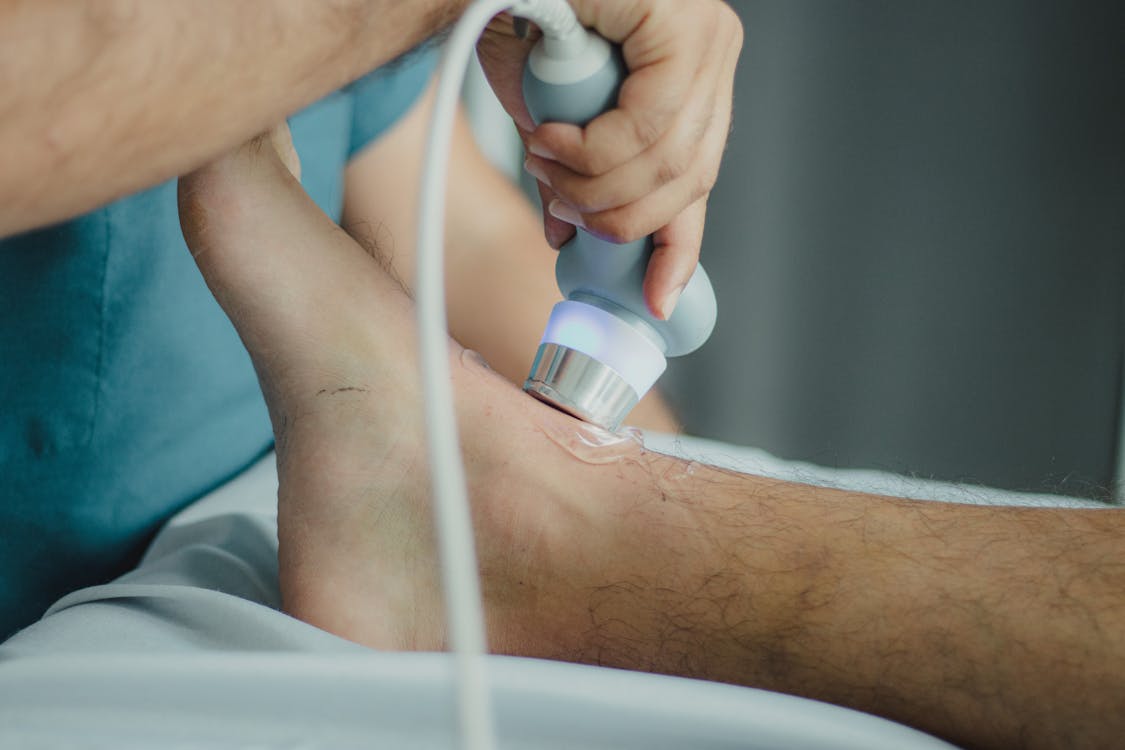
Focused shockwave therapy F-ESWT device being applied during erectile dysfunction treatment session in NYC

Achilles Tendinitis & Shockwave Therapy: How Your Body’s Own Stem Cells Do the Work

You searched for stem cell therapy for your Achilles tendon. Here’s what most clinics won’t tell you: shockwave therapy does the same thing — by activating the stem cells already inside your body — at a fraction of the cost.

If you’ve been dealing with Achilles tendinitis for more than a few weeks, you know the drill: rest, ice, stretching, maybe a cortisone injection that offered temporary relief. At some point, someone mentions stem cell therapy. You look it up. You see the price tag — $5,000 to $25,000 per injection, rarely covered by insurance — and you close the tab.

What almost no one explains is that there’s a treatment that has been peer-reviewed, clinically validated, and in use for over a decade that triggers the same biological process stem cell injections are trying to replicate — using the stem cells your body is already producing. It’s called focused shockwave therapy, and at CityIR, we’ve been delivering it since 2015.

Why Achilles Tendinitis Is So Difficult to Treat

The Achilles tendon is the largest, strongest tendon in the body — and one of the most poorly supplied with blood. That’s the core problem. When it becomes damaged or inflamed from overuse, the tissue doesn’t repair itself efficiently because the materials needed for healing (oxygen, growth factors, stem cells) can’t get there in adequate supply.

This is why Achilles tendinitis becomes chronic so easily. Rest reduces pain temporarily, but it doesn’t fix the underlying tissue damage. Physical therapy helps, but it hits a ceiling. Cortisone injections suppress inflammation — but research has shown they can actually weaken tendon tissue with repeated use and are associated with higher rupture risk in the Achilles specifically. And surgery carries months of non-weight-bearing recovery with no guarantee of full return to activity.

The goal of any effective treatment for chronic Achilles tendinopathy isn’t pain management. It’s tissue regeneration. That’s where the stem cell conversation starts — and where shockwave therapy enters the picture.

What Stem Cell Therapy for Tendons Is Actually Trying to Do

Stem cell injections for tendon injuries work by introducing mesenchymal stem cells (MSCs) — undifferentiated cells capable of becoming tendon, cartilage, or bone tissue — directly into the damaged area. The idea is that these injected cells will differentiate into healthy tendon tissue and rebuild what’s been damaged.

The research on injected MSCs for tendon disorders is promising but far from settled. A 2024 meta-analysis published in a peer-reviewed orthopedic journal found that while MSC therapy showed improvement in pain and function scores, the quality of evidence remains at level 3, and no stem cell products using expanded MSCs have received FDA approval for orthopedic use as of 2026. Florida became the first state in July 2025 to permit physicians to perform unapproved stem cell therapy for orthopedic conditions — which tells you how unsettled the regulatory picture is.

Meanwhile, the cost of a single stem cell injection for an Achilles tendon ranges from $5,000 to $25,000, requires procurement of cells (often from bone marrow or adipose tissue), and involves its own procedural risks.

The question worth asking is: what if you didn’t need to inject stem cells, because you could activate the ones already inside your body?

How Shockwave Therapy Activates Your Own Stem Cells

Focused extracorporeal shockwave therapy (fESWT) delivers precise, high-energy acoustic pulses deep into the Achilles tendon. These pressure waves do several things simultaneously — but the one that matters most for chronic tendinopathy is their effect on mesenchymal stem cells.

Peer-reviewed research has demonstrated that shockwave therapy stimulates the proliferation, migration, and differentiation of MSCs at the treatment site. In plain terms: shockwave signals your body to send its own repair cells to the damaged tissue, tells those cells to multiply, and prompts them to become the type of tissue that needs to be rebuilt. This isn’t an analogy or a loose approximation. It’s the same biological mechanism stem cell injections are designed to trigger — without the injection, without the extraction procedure, and without the five-figure price tag.

Additionally, focused shockwave:

  • Stimulates neovascularization — the formation of new blood vessels — which solves the Achilles tendon’s core blood supply problem
  • Breaks down calcifications and scar tissue that accumulate in chronic cases
  • Upregulates collagen synthesis and remodeling at the tendon insertion
  • Reduces substance P concentrations, which desensitizes the nerve fibers driving chronic pain

This is why patients don’t just feel better after shockwave. The tendon is actually healing.

What to Expect: Shockwave for Achilles Tendinitis at CityIR

We’ve been delivering focused and radial ESWT since 2015 — longer than most clinics in the New York metropolitan area have offered shockwave at all. For Achilles tendinopathy specifically, the typical protocol looks like this:

Sessions: 4–6 sessions, spaced approximately one week apart. Each session takes 15–20 minutes.

During treatment: A handheld device is placed against the skin over the Achilles tendon. Patients describe a tapping or pressure sensation. Intensity is fully adjustable. No anesthesia is needed.

After treatment: You walk out. No downtime, no immobilization, no crutches. Most patients return to light activity within 24–48 hours.

Results timeline: Some patients notice improvement after the second or third session. Full tissue remodeling — the stem cell and collagen repair process — continues for 8–12 weeks after the final session. That’s when most patients see the full extent of their recovery.

Who responds best: Patients with insertional or mid-portion Achilles tendinopathy who have been symptomatic for more than 6 weeks, have tried conservative measures (stretching, eccentric loading, orthotics), and want to avoid surgery or injections. Shockwave is also highly effective when prior cortisone injections have worn off.

Shockwave vs. Stem Cell Injections: An Honest Comparison

If you’re weighing your options, here’s a straightforward side-by-side:

Focused Shockwave (fESWT)Stem Cell Injection
MechanismActivates your body’s own MSCsIntroduces harvested MSCs externally
FDA statusCleared device; established clinical useNo FDA approval for orthopedic MSC products (as of 2026)
Typical costSeveral hundred dollars per session$5,000–$25,000+ per injection
DowntimeNoneVariable; some protocols require rest
Sessions needed4–6 over 4–6 weeks1–3 injections
Evidence levelExtensive peer-reviewed literature; high success rates for AchillesPromising but level 3 evidence; no FDA-approved product
AvailabilityAvailable at CityIR Manhattan and Great NeckLimited; largely cash-pay, unregulated in most states

This isn’t a knock on stem cell research — the science is genuinely interesting and the field is advancing. But for a patient with chronic Achilles tendinopathy who needs a reliable, evidence-backed, accessible option right now, shockwave therapy does what stem cell injections are attempting to do, with a decade of clinical validation behind it.

Is Shockwave Right for Your Achilles Tendinitis?

Shockwave therapy works best for patients who:

  • Have had Achilles pain for more than 6 weeks
  • Have tried stretching, physical therapy, or orthotics with incomplete relief
  • Had cortisone injections that only worked short-term — or want to avoid them
  • Are looking for a non-surgical path back to running, sport, or daily activity without pain
  • Want a treatment that stimulates real healing rather than masking symptoms

If cortisone has been your go-to and it’s stopped working, or if you’ve been quoted $10,000+ for stem cell injections and you’re wondering whether there’s another way — there is. And we’ve been doing it for over a decade.

Shockwave therapy for Achilles tendinitis is available at our Manhattan and Great Neck locations. Call or text either office to find out if you’re a candidate — no pressure, just answers.

Book an Appointment  |  Manhattan: (646) 256-9513  |  Great Neck: (516) 418-3798