
Aching or sharp pain in the wrist, hand, or fingers
Conditions we treat
Wrist and Hand Pain Treatment
Wrist and hand symptoms require attention to local tissues, grip demands, repetitive loading, and the rest of the upper limb.
Book an evaluation ↗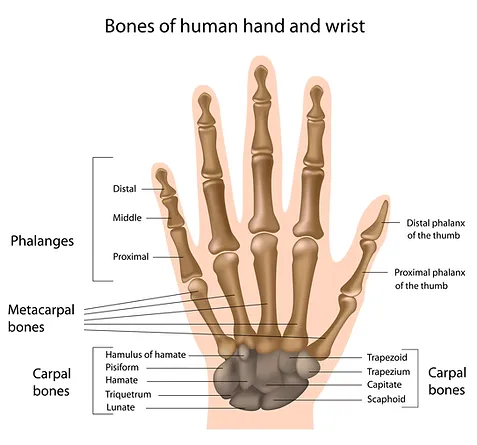
Conditions we treat
Understanding Wrist and Hand Pain
Wrist and hand pain is one of the most common musculoskeletal complaints among New Yorkers, affecting everyone from office workers and musicians to athletes and manual laborers. The hand and wrist complex is an extraordinary biomechanical system — containing 27 bones, over 25 joints, and a dense network of tendons, ligaments, nerves, and small muscles that work together to produce the precise movements we rely on every day. Given the enormous demands we place on our hands — typing, gripping, lifting, and performing fine motor tasks — it is no surprise that wrist and hand pain can be profoundly disabling. Whether your pain stems from carpal tunnel syndrome, tendinitis, arthritis, or a traumatic injury, City Integrative Rehabilitation provides expert wrist and hand pain treatment in Manhattan using an integrative approach that addresses the contributing factors of your symptoms.
Assessment-led care · Manhattan and Great Neck
Acute vs. Chronic Wrist and Hand Pain
Distinguishing between acute and chronic wrist and hand pain is essential for determining the most effective treatment approach. Acute pain develops suddenly — often from a fall onto an outstretched hand, a sprain, or a fracture — and typically improves within weeks with appropriate medical care. Chronic wrist and hand pain persists for three months or longer and usually involves deeper structural issues such as degenerative arthritis, chronic tendinopathy, nerve entrapment, or ongoing repetitive strain. The severity of the condition often determines whether conservative treatment alone is sufficient or whether more advanced interventions are needed. When acute injuries are not properly rehabilitated, they frequently lead to chronic stiffness, weakness, and progressive dysfunction. Our pain doctors evaluate the timeline, mechanism, and pattern of your symptoms to develop the most effective treatment strategy.
Common Symptoms of Wrist and Hand Pain
Wrist and hand pain presents with a variety of symptoms depending on the underlying cause. Recognizing your specific pattern helps our pain specialists provide a more accurate diagnosis and targeted treatment plan. Common symptoms include:
Numbness or tingling in the thumb, index, and middle fingers
Weakness in grip strength or difficulty holding objects
Stiffness — particularly noticeable in the morning or after prolonged use
Swelling or visible deformity in the wrist or finger joints
Pain that worsens with gripping, twisting, or typing
Clicking, catching, or locking of the fingers (trigger finger)
Pain at the base of the thumb that worsens with pinching
Dropping objects or difficulty with fine motor tasks
Common Causes of Wrist and Hand Pain
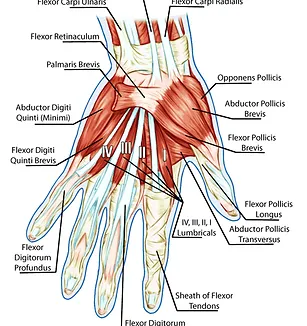
Additional causes include wrist sprains and ligament injuries (including scapholunate ligament tears), hand and wrist arthritis (osteoarthritis and rheumatoid), ganglion cysts, fractures (scaphoid fractures are commonly missed), Dupuytren’s contracture, and sports-related hand injuries. Elbow dysfunction and cervical spine issues can also refer pain or contribute to nerve symptoms in the hand and wrist, making comprehensive evaluation essential.
Carpal tunnel syndrome
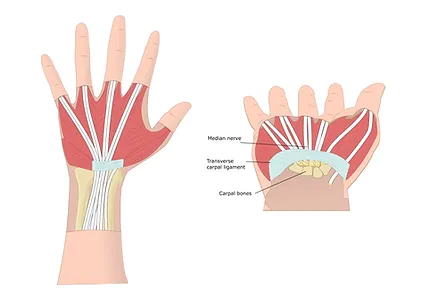
Carpal tunnel syndrome is the most common nerve entrapment condition in the upper extremity. It occurs when the median nerve becomes compressed as it passes through the carpal tunnel — a narrow passageway in the wrist formed by bones and ligaments. Carpal tunnel syndrome causes numbness, tingling, and pain in the thumb, index, middle, and ring fingers, often worsening at night. It is especially prevalent among office workers, assembly line workers, and anyone who performs repetitive wrist movements.
De Quervain’s tenosynovitis
De Quervain’s tenosynovitis involves inflammation of the tendons on the thumb side of the wrist, causing pain with gripping, pinching, and wrist movement. This condition is common among new parents (from repetitive lifting), office workers, and athletes. The pain is typically worst when making a fist, grasping objects, or turning the wrist.
Trigger finger (stenosing tenosynovitis)
Trigger finger (stenosing tenosynovitis) occurs when the tendon sheath in a finger becomes inflamed and thickened, causing the finger to catch, click, or lock in a bent position. Trigger finger can affect any digit and is common in people who perform repetitive gripping activities or have diabetes or rheumatoid arthritis.
Wrist tendinitis
Wrist tendinitis involves inflammation of the tendons that cross the wrist joint, causing pain with movement and sometimes crepitus (a grinding sensation). Overuse from repetitive activities — typing, playing instruments, or sports — is the most common cause.
Risk Factors for Wrist and Hand Pain
Several factors increase the likelihood of developing wrist and hand problems. Repetitive occupational movements — particularly typing, mouse use, assembly work, and manual gripping — are among the most significant risk factors. Occupations requiring prolonged computer use are especially associated with carpal tunnel syndrome and wrist tendinitis. Racquet sports, golf, climbing, and gymnastics place substantial stress on wrist structures. Pregnancy and hormonal changes can increase fluid retention in the carpal tunnel, triggering median nerve compression. Diabetes increases the risk of carpal tunnel syndrome and trigger finger. Rheumatoid arthritis and other inflammatory conditions accelerate joint damage in the hand and wrist. Previous wrist fractures or sprains alter joint mechanics and predispose to arthritis. Poor ergonomic workstation setup — including incorrect keyboard angle and lack of wrist support — contributes to chronic overuse conditions.
How Wrist and Hand Pain Is Diagnosed
Accurate diagnosis is the foundation of effective wrist and hand pain relief. Our doctors begin with a detailed patient history followed by a comprehensive physical examination that includes wrist and hand range of motion testing, grip and pinch strength measurement, specific provocation tests (Phalen’s test and Tinel’s sign for carpal tunnel, Finkelstein’s test for De Quervain’s), nerve conduction assessment, and evaluation of the elbow, shoulder, and cervical spine. We examine the entire upper extremity kinetic chain because dysfunction above the wrist frequently contributes to hand symptoms. When necessary, we may recommend diagnostic imaging such as X-rays, MRI, ultrasound, or nerve conduction studies to visualize fractures, ligament tears, tendon damage, or nerve compression.
Wrist and Hand Pain Treatment Options at City Integrative Rehabilitation
Our integrative treatment approach draws from multiple disciplines to provide the most comprehensive wrist and hand pain care available in New York City. Every treatment plan is customized to the individual patient based on the specific diagnosis, the severity of the condition, and your functional goals.
Physical Therapy
Physical therapy is the cornerstone of wrist and hand pain recovery. The rehabilitation team designs progressive rehabilitation programs that restore grip strength, improve finger and wrist mobility, and address the movement patterns that contributed to the injury. Manual therapy techniques — including joint mobilization and soft tissue work — reduce pain and restore function. Nerve gliding exercises are particularly effective for carpal tunnel syndrome, while tendon gliding exercises help manage trigger finger and tendinitis.
Sports Chiropractic
Our chiropractors use targeted joint mobilization techniques to restore proper alignment and movement throughout the wrist, hand, elbow, and cervical spine. Restrictions in the carpal bones, radiocarpal joint, and distal radioulnar joint are common contributors to chronic wrist pain. Addressing cervical spine and thoracic outlet restrictions can significantly improve nerve function to the hand.
Shockwave Therapy
Extracorporeal shockwave therapy delivers targeted acoustic energy to damaged tissues, supporting local tissue recovery and function. This advanced modality is particularly effective for chronic wrist tendinitis, De Quervain’s tenosynovitis, and other soft tissue conditions that resist conventional treatment.
Dynamic Neuromuscular Stabilization (DNS)
DNS uses developmental kinesiology principles to retrain how the brain controls hand, wrist, and upper extremity stabilization. By addressing faulty motor patterns at the neurological level, DNS creates deeper, more durable improvements in hand function than isolated hand exercises alone.
Anatomy in Motion (AiM)
Anatomy in Motion examines how the entire body moves and identifies global movement dysfunctions that may be contributing to upper extremity overload. Postural imbalances, thoracic spine restrictions, and shoulder dysfunction can all alter how the wrist and hand function during daily activities.
When to Consider Advanced Interventions
For patients with severe wrist and hand pain that has not responded adequately to conservative care, advanced interventional procedures may be appropriate. Corticosteroid injections can reduce inflammation in the carpal tunnel, tendon sheaths, or finger joints. Wrist splinting — particularly nighttime splinting for carpal tunnel syndrome — can provide significant symptom relief. Platelet-rich plasma (PRP) injections promote tissue healing in chronic tendon conditions. These minimally invasive procedures are typically considered after a thorough trial of conservative therapy.
For cases of significant structural damage — such as severe carpal tunnel syndrome with muscle wasting, complete ligament tears, or advanced arthritis — where conservative approaches have been exhausted, surgical consultation may be recommended. Our team provides comprehensive pre- and post-surgical rehabilitation to optimize outcomes for patients who undergo hand or wrist surgery.
The Hand-Wrist-Elbow-Neck Connection
The hand and wrist do not function in isolation — they are part of an interconnected upper extremity kinetic chain. Nerve compression at the cervical spine (cervical radiculopathy) or at the elbow (cubital tunnel syndrome) can produce numbness, tingling, and weakness in the hand that mimics local conditions like carpal tunnel syndrome. Shoulder tightness and thoracic outlet syndrome can compromise blood flow and nerve function to the entire arm. Conversely, chronic hand and wrist dysfunction alters how forces distribute up through the forearm and elbow. At City Integrative Rehabilitation, we evaluate the entire kinetic chain rather than treating the hand in isolation — this comprehensive approach is essential for lasting pain relief and preventing recurrence.
Our Clinic’s Approach: Why Choose City Integrative Rehabilitation
What sets City Integrative Rehabilitation apart is our whole-body approach to wrist and hand pain treatment. Rather than simply addressing the site of pain, we examine how your entire upper extremity and body moves and functions to find the contributing factors. Our NYC clinic brings together clinicians and rehabilitation professionals who collaborate on every case — sharing findings, adjusting strategies, and ensuring that every aspect of your condition is addressed. Located conveniently in Manhattan near Central Park, we make it easy for busy New Yorkers to get the expert medical care they need.
Insurance and Scheduling Your First Visit
Insurance participation and benefits vary by plan, provider, location, and service. Contact CityIR so the office can verify current benefits, referrals, deductibles, copays, and authorization requirements before scheduling.
At-Home Care and Lifestyle Modifications for Wrist and Hand Pain
What you do between clinical visits plays a critical role in your recovery. Ergonomic adjustments to your workstation — including a split keyboard, ergonomic mouse, and proper wrist positioning — can significantly reduce strain during office work. Wearing a wrist splint at night keeps the wrist in a neutral position and can dramatically improve carpal tunnel symptoms. Gentle wrist stretches and tendon gliding exercises, when prescribed by your therapist, promote healing and maintain mobility. Taking regular breaks during repetitive hand activities allows tissues to recover. Ice application for 15 to 20 minutes after activities that aggravate your condition helps manage inflammation. Our team provides each patient with individualized home exercise programs tailored to their specific condition and daily demands.
Conditions We Treat
Our team specializes in treating a wide range of wrist and hand conditions, including:
Carpal tunnel syndrome
De Quervain’s tenosynovitis
Trigger finger
Wrist tendinitis
Wrist sprains and ligament injuries
Hand and wrist arthritis
Ganglion cysts
Scaphoid fractures and wrist fractures
Dupuytren’s contracture
Thumb arthritis (CMC joint)
Frequently Asked Questions About Wrist and Hand Pain
What are the early signs of carpal tunnel syndrome?
Early signs of carpal tunnel syndrome include numbness and tingling in the thumb, index, and middle fingers — often worsening at night or upon waking. You may notice you need to shake your hands to relieve symptoms. As the condition progresses, grip weakness and difficulty with fine motor tasks like buttoning clothes become apparent. Early treatment with splinting, nerve gliding exercises, and ergonomic modifications typically prevents the need for surgery.
Can wrist pain be caused by a neck problem?
Yes. Cervical nerve root compression — particularly at the C6-C7 levels — can produce pain, numbness, and tingling in the wrist and hand that closely mimics carpal tunnel syndrome. This is called cervical radiculopathy or a “double crush” phenomenon when both the neck and wrist contribute to nerve compression. A comprehensive evaluation that examines the entire upper extremity chain is essential for accurate diagnosis.
How long does carpal tunnel syndrome take to improve with treatment?
With appropriate conservative treatment — including nighttime splinting, nerve gliding exercises, ergonomic modifications, and physical therapy — many patients experience significant improvement within 4 to 8 weeks. More severe cases may take longer. Early intervention is critical, as prolonged median nerve compression can lead to permanent nerve damage and muscle wasting.
What is De Quervain’s tenosynovitis and how is it treated?
De Quervain’s tenosynovitis is inflammation of the tendons on the thumb side of the wrist, causing pain when gripping, pinching, or turning the wrist. Treatment typically includes thumb spica splinting, activity modification, targeted physical therapy exercises, and anti-inflammatory measures. Shockwave therapy can be highly effective for cases that resist initial conservative treatment.
Ready to start your recovery? · Get expert treatment in NYC
Don’t let wrist and hand pain interfere with your daily life.
City Integrative Rehabilitation offers expert hand and wrist pain treatment in Manhattan using advanced, non-surgical techniques. Schedule your consultation today and take the first step toward recovery.
Book an AppointmentView All Conditions We Treat | Learn About Shockwave Therapy
Great Neck: (516) 418-3798Manhattan: (646) 256-9513Huntington: (631) 659-2980Nesconset: (631) 584-8783